
In brief
- Takeoff follows a standard and set procedure
- Understanding the sounds, stages and announcements during takeoff can help to reduce anxiety
- There are practical ways that you can stay calm during takeoff (and all other stages of the flight)
Learning to stay calm during takeoff
Flying involves a huge amount of new experiences in a short space of time, and our brains don’t like that. To help reduce anxiety, we’re going to walk through each stage of takeoff.
Learn about the stages, sounds, and feelings you’ll experience on every flight. Doing so can help you mentally prepare, so you’ll have confidence as you start to roll down the runway.
This takeoff guide starts the second you step inside the plane and take to your seat…
1. The cockpit is ready while you buckle up
Long before wheels roll, the flight crew and ground personnel are in motion, doing everything they need to ensure you have a safe flight.
Pilots work through the preflight checklist, verifying everything from flight instruments to fuel levels and system checks. Cabin crew ensure trays are stowed, seatbacks upright, and passengers are belted in.
At this stage, the cabin can feel chaotic, so ignore external noise and focus on you and your area of the plane.
2. Boarding, announcements, and the safety briefing
Flight attendants guide you to settle in. They’re on hand to help secure luggage, locate your seat, and prepare the cabin for departure.
Once all passengers are on board, you’ll hear the words: “Flight attendants, prepare doors for departure and cross-check.” This signifies that the plane door can be sealed shut and preparations can be made for takeoff.
Cabin crew will deliver the pre‑flight safety demonstration. This is more than a checklist of “brace positions” and “seat‑belt fastening.” These are vital instructions your brain might ignore until you really need them.
You may also hear an introduction from the captain or co-pilot during this time with information on flight time and weather conditions.
3. Pushback and taxi
During this period, you may hear the engines hum as they’re tested, the ailerons may move up and down, and flight attendants may dim the cabin lights. These are signals that the journey is truly underway.
The aircraft is pushed back from the gate, or occasionally starts taxiing under its own power. The pilot is taking you to your allotted runway, ready for takeoff.

4. Lined up for departure, final passenger checks
As the plane lines up for takeoff, the crew does a final cabin check. During this check, they’re making sure aisles are clear, electronics stowed, and seatbelts are fastened.
In the cockpit, the pilot and co-pilot receive clearance from air traffic control, confirming that it’s safe to proceed.
At this point, you may feel the cabin feels a little tense. That’s because you’re ready for takeoff.
5. The roll
You may need to wait some time to take off, or it could be immediate. It really depends on the airport and an available slot opening up. You’ll see cabin crew are seated and strapped in.
When it’s time to take off, the pilot pushes the throttle forward. This unleashes thrust from the powerful engines that propel the plane forward and you back into your seat.
Speed builds rapidly as the engines generate thrust. This is the ground roll and is the powerful push before takeoff. When thrust overcomes drag, lift begins to work its magic and the plane takes off.
6. Rotation and lift‑off
We’re going to get a little technical here. At a specific speed (known as V₁), the pilots commit to the takeoff. From this point, procedures are designed to ensure the aircraft continues safely into the air, even if an issue arises.
Past that point, stopping safely is no longer an option. Next comes Vr, or rotation speed. At this point, the pilot gently pulls nose-up to lift off from the ground. That pitch appears steeper than it actually is, but it’s enough to generate lift.
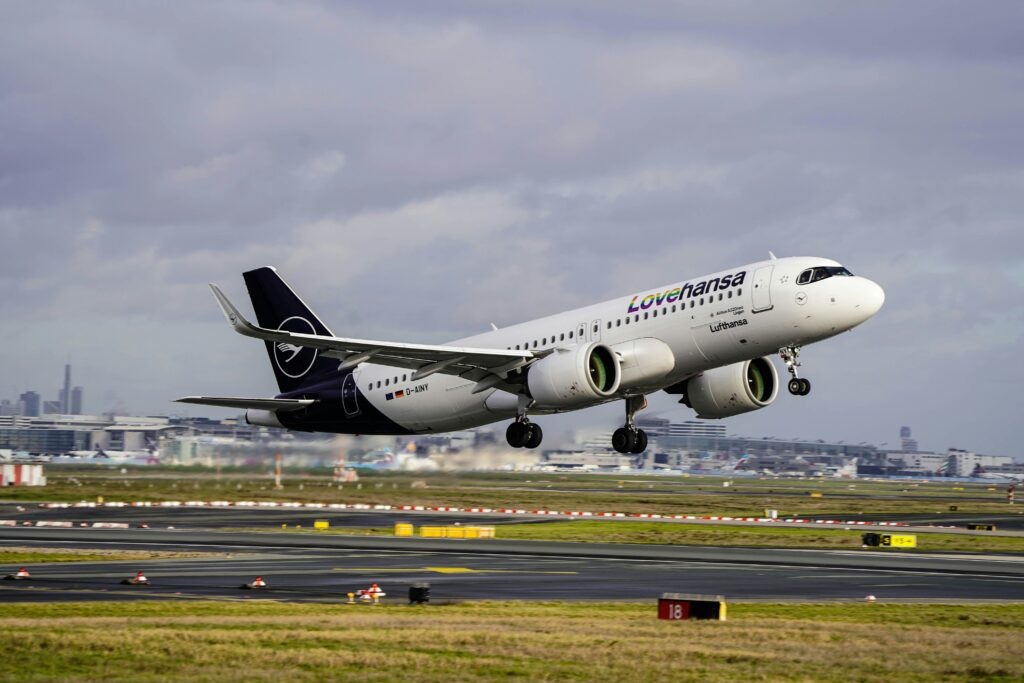
You’ll feel pressed into your seat, and within seconds, you’re in the air. You may hear a sound as the landing gear extends retracts as the plane takes to the air. It’s normal and nothing to be afraid of.
7. Climb
Once airborne, pilots retract the landing gear and adjust flaps and slats. These are the extra surfaces on the wings that help at low speeds. You’ll hear a mechanical noise as they move back into place.
You may feel the engines throttle back slightly to balance climb and acceleration. As the plane climbs, you may feel light or a subtle lurch (often described as a drop). This is totally normal.
Inside, the cabin is pressurised gradually to maintain comfort. You’ll notice that your ears begin to pop. (To stop this happening, sucking on a sweet can help.)
Depending on your destination and route, the plane may make one (or more) turns. Banked turns can be unnerving, especially if you are close to the ground, but the plane is safe and stable and doing what it loves: flying.
Cabin crew may begin service even during climb, especially on short flights.
8. Settling into cruise altitude
After the intensity of takeoff, climbing to cruise altitude should be smooth.
The plane ascends for 10-15 minutes until it reaches cruise altitude. (The plane may do this in one motion or in steps, called a step climb.)
When the plane reaches cruise, the cabin will level out. Cabin lights are adjusted, and the pilot may turn off the seatbelt sign.

9. In-flight service
The experience of take off can seem intense, but in most flights, it’s over in less than 15 minutes. At cruise, the plane is at its fastest speeds and its most stable altitude.
During cruise, your cabin crew may serve food and drinks. You can sit back and enjoy an in-flight movie, music, read a book, or simply stare out of the window at the magic of the world underneath you.
Before you know it, it’ll be time to descend to your destination. We’ll cover that in another guide.
How to be confident and calm during takeoff
Frequent flyers understand the noises, sounds, and sensations of takeoff – and so can you. The process and procedure are the same every flight, so print out this guide and follow it next time you fly.
- Brace yourself mentally. Use the safety briefing to focus, not tune out. Listen to all announcements, information and advice.
- Leave the tray table up and seat upright, and *always wear a seatbelt*: It’s vital you do all these things to stay safe. They’re not optional, but mandatory.
- Feel the motion, but lean back. That sense of force is expected when you fly. Don’t try and fight it, give in to the sensation and enjoy it.
- Eyes open? Having your shade up doesn’t just follow rules. It helps with spatial orientation, providing a key link between what you’re feeling and seeing.
- Breathing exercises help: Learning some breathing techniques can keep you calm, confident and grounded – even as you ascend to 35,000 feet (or more!).
You can download our Calm Flight Toolkit for more in-air reassurance.
If you’re interested in what happens during your flight, check out our guide to the science of flight (and why it’s safe), what happens during turbulence and landing.
Please share this article with anyone who might benefit from it.
FAQs
During takeoff, the plane’s engines will be at maximum thrust to propel the plane down the runway and leave the ground. This rapid acceleration can force you back into your seat. It’s completely same, normal and exhilarating.
During takeoff you’re exposed to lots of new sounds and sensations that can be overwhelming and increase anxiety. It’s also the final stage before y leave the ground, which can increase anxiety in some people. For many nervous flyers, the anxiety begins to reduce once the plane is in the air.
Breathing techniques, grounding and mindfulness are all ways that you can reduce anxiety during takeoff. These exercises can help to reduce anxiety while you ascend to cruise altitude.