
In brief
- Airplane wings are designed to flex and bend
- Bending isn’t a signal of weakness, it helps to distribute forces on the wings and prevent structural failure
- Plane wings are built from advanced composites that allow maximum flexibility without weakness
- When the wings on your plane bend, it might look dramatic, but they’re doing their job of keeping you safe and in the air
Why wings are designed to flex
Airplane wings bend because they’re designed that way to absorb forces and protect the structural integrity of the plane.
Modern aircraft wings are built from advanced materials that are incredibly strong and are able to withstand forces much greater than you’re ever likely to experience during a flight.
Instead of worrying about the wings bending during turbulence, it’s worth investing some time learning how they’re designed, understanding what they’re made from and how they keep you safe.

Wings aren’t rigid structures (and that’s deliberate)
Airplane wings are not built like solid slabs, they’re carefully engineered beams that are incredibly strong, and designed to move under load.
When lift is generated, the wings are effectively being pushed upward by the air. At the same time, the weight of fuel, engines, and structure pulls downward.
Instead of resisting these forces rigidly, the wing absorbs and distributes them by flexing.
This reduces the kind of stresses that cause cracks or sudden failures. When wings bend, they’re distributing this pressure across the whole wing, accepting it rather than fighting it.
When your plane is in the air, the wings are constantly balancing competing forces, including
- Lift pushing up
- Weight pulling down
- Airflow changing moment to moment
During turbulence a rigid wing would take these loads directly. As well as making things more uncomfortable inside the cabin, it would increase the risk of dramatic failure.
Engineers know that a flexible wing acts a bit like the suspension system in your car, bending to absorb the impact of riding through rough areas. As well as making flying smoother, flexible wings make it smoother, too.
Why modern wings bend more than older ones
Modern aircraft wings, fuselages and aircraft nacelles are built from advanced composite materials like carbon fibre. These super strong materials give engineers and designers the freedom to create structures that are both lighter and more flexible than previous designs, and all without sacrificing strength.
Flexible wings have several benefits to airline operators, pilots and passengers including:
- Improved fuel efficiency (lighter wings)
- Better load distribution
- Increased lifespan of the structure
- Enhanced performance in turbulence
If a wing seems to bend more than you expected, it’s likely because it’s been engineered to do that.
How much bending is “normal”?
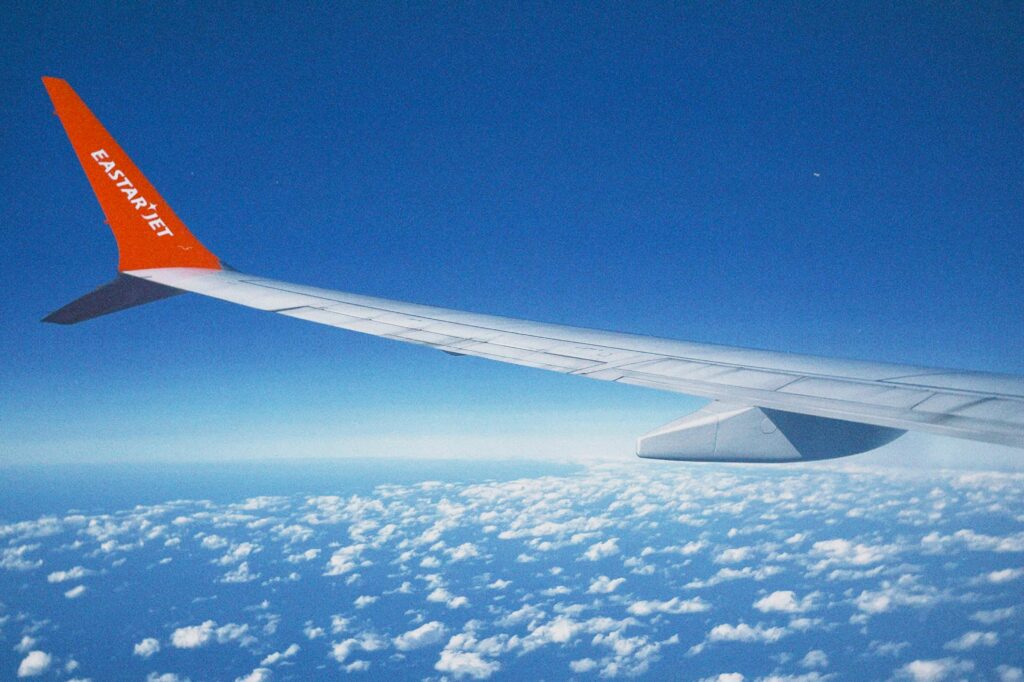
On large commercial aircraft, wing tips can move several metres during flight .This is completely normal. You’ll notice that airline wings change shape. On the ground, they can look almost straight. In the air when they’re under load they curve upwards.
This isn’t a problem, wings are designed to flex this way.
During testing, wings are pushed far beyond normal operating limits. They’re exposed to extreme forces and bent upwards to extreme angles (in some cases until they’re bent/) . This is all part of the stringent certification process
It’s important to know that a wing that bends absorbs energy and is actually reducing structural stress on the plane – making the flight safer and smoother. If you see a wing bending and flexing, it’s doing its job.
If you’re anxious before your flight, check out the Help Desk and download our Calm Flight Toolkit.
Please share this article with anyone who might benefit from it.
FAQs
Yes. Turbulence changes the forces acting on the wing, and bending helps absorb those changes. The flexing of the wings can actually absorb some of the turbulence, reducing its impact on passengers inside the plane.
Aircraft are tested well beyond normal limits. While they can – and are – pushed to breaking point, the forces they’re exposed to are far in excess of anything you’re likely to experience in a commercial flight.
When you look at the wings from inside a plane, you’re seeing the movement of the tip of a long and strong structure. At the fuselage (next to the cabin), movement may be minimal. At the end of the wing, it can look extreme. It’s also important to recognise that you may be feeling anxious and this can influence your perception of movement and your views on aircraft safety and stability.