In brief
- Loss of control is a common trigger for fear of flying anxiety, despite knowing how safe flying is
- The perception of losing control can activate the fight-or-flight response
- There are practical ways you can reduce in-flight anxiety, including breathing exercises, mindfulness and grounding techniques
Why loss of control fuels fear of flying
Flying is one of the safest modes of transport, yet it remains a common trigger for anxiety. In many cases, being afraid of flying isn’t because of technical concerns, but is caused by the fear of being out of control.
Understanding the role control plays in flight anxiety can transform how we think about fear of flying. It can also help us in developing ways to deal with it. While flying may never be fun for you (or most of us), regaining control can give you the confidence to get on board.
Why control matters
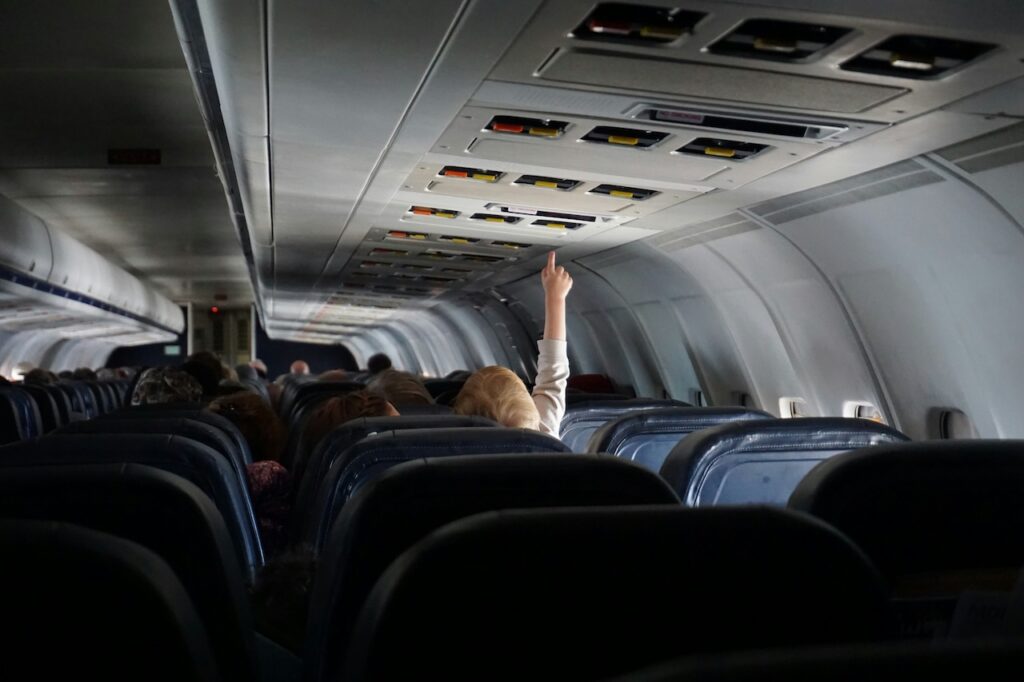
Flying is an incredible experience, but for someone with flight anxiety, it can feel like being sealed in a metal tube for hours on end. Claustrophobia and a lack of control can lead to people feeling they are no longer in charge of their own safety or decisions.
This perception of helplessness activates a primal fear circuit in the brain known as the fight-or-flight response.
The fight-or-flight response is controlled by the amygdala. When exposed to stress, this ancient system floods the body with adrenaline and cortisol, effectively preparing it to escape or defend against perceived danger.
You’re likely to know this, but research has gone further. Recent scientific research suggests that perceived control, not actual control, is what influences our anxiety levels.
A study published in Psychology Today highlights how our subjective sense of agency (control) affects our emotional reactions during flights. Even if logically we know that commercial aviation is statistically safe, the brain’s threat system responds to a deeper, intuitive sense of vulnerability.
Or, to put it another way, instinct trumps information.
An interesting article in the Wall Street Journal reported that many fearful flyers describe their anxiety as stemming from the inability to intervene or “stop” the plane. This fear remains even if they know there’s nothing to do in reality.
This psychological paralysis of being strapped in while someone else pilots it fuels a perception of danger. Even when people know the danger isn’t real, they still perceive a threat.
What the research tells us about control and anxiety
Understanding the causes of control-related anxiety can help to identify potential treatments and solutions, including CBT, virtual reality exposure therapy (VRET), and personally-directed control strategies.
Cognitive behavioural therapy (CBT)
CBT has consistently been shown to help individuals reframe distorted thoughts around flying.
CBT can help fearful flyers develop new ways of thinking. A key focus is tackling the internal narrative of “I can’t handle this” or “I have no control” and reframing it.
CBT interventions aim to disrupt the link between anxious thoughts and physical symptoms. Trained therapists can help people to alter their perceptions of flying to give them confidence.
In a clinical study, participants who underwent CBT demonstrated measurable reductions in flight anxiety—particularly when they learned to question their assumptions about danger and powerlessness. By replacing catastrophic thinking with grounded alternatives, CBT helped reintroduce a sense of control over their emotional responses.

Virtual reality and exposure therapy
Virtual reality exposure therapy is an increasingly valuable tool to help people cope with their fear of flying. Unlike physical exposure therapy, VRET doesn’t change the external circumstances of the flight, but it can change how the brain reacts to it.
Gradual exposure helps to desensitise the individual to fear cues. People can use VR headsets to experience flight all from safe and relaxed surroundings. This exposure can help fearful flyers to rebuild internal confidence, which, in itself, is a form of control.
A study found that virtual reality exposure therapy (VRET) was effective in reducing flight anxiety, often more so than no-treatment control conditions.
Self-efficacy and locus of control
There’s a subtle but important distinction between self-efficacy (the confidence in your ability to cope) and locus of control (the belief that you influence outcomes).
One study found that after a fear-of-flying intervention, participants felt more able to manage their anxiety. They didn’t, however, feel they had control over their flights. That’s because the only people in control of flights are pilots.
Real-world strategies for regaining control
Unless you’re a pilot, you won’t get to ride in the cockpit. But don’t fear, there are still countless ways that you can restore your sense of psychological control when flying.
Here are some strategies proposed by travellers, therapists, and professionals to help you manage your fear of flying.
Strategy #1: Breathing and grounding
While you can’t control a flight, you can control your breathing. The simple act of slowing your breathing can reduce sympathetic nervous system activation, lowering heart rate and anxiety.
Experts recommend box breathing: inhale for four seconds, hold for four, exhale for four, and hold again. This exercise regulates your parasympathetic nervous system and shifts your attention away from catastrophic thoughts.
According to National Geographic, using breathwork and sensory grounding techniques like the “5-4-3-2-1 method” (noticing five things you can see, four you can touch, etc.) can significantly reduce panic during takeoff or turbulence.
Both of these techniques can be learned and practiced before you step on board a plane. While they won’t necessarily cure your anxiety, they can help you gain confidence.
Strategy #2: Reframe the narrative: powerlessness to confident passenger
Cognitive reframing can be a hugely effective technique for fearful flyers. It’s all about challenging and changing your inner monologue.
When anxiety whispers, “I’m trapped”, your response might be: “I’ve done this before and landed safely. This discomfort will pass.”
You’re best placed to develop your own phrases. Find words that give you comfort and instill confidence. Write them down as well as remembering them.
This Time article on flying anxiety recommends that passengers stop resisting anxiety and instead acknowledge and allow it. This process of acceptance can, paradoxically, reduce feelings of fear.
You are afraid, you know you’re afraid, but you won’t give in to fear.
You might also find some strength in building reassurance rituals. These are symbolic gestures that give a sense of ownership over the experience, reinforcing perceived control. It sounds complicated, but it can be as simple as sitting in the same seat, carrying a book, favourite toy, or blanket.
These things can give you extra confidence, but it’s important not to develop superstitions, which can be psychologically damaging.
Strategy #3: Learn the facts: knowledge is power
Education is a powerful antidote to catastrophic thinking. Some fearful flyers take solace in the knowledge that flying is the safest form of transportation (because it is).
You can read books, or websites (like Fly Above Fear), or actually learn from pilots about the mechanics of flight.
Courses like British Airways’ Flying with Confidence and easyJet’s Fearless Flyer provide sessions with pilots, simulations, and scientific explanations of how planes stay airborne, even in turbulence. Courses such as these blend classroom learning with a real flight, where you’ll hear directly from the flight deck.
A Condé Nast Traveler journalist recommends understanding the physics of flight and pilot training to reduce irrational fears. The more you know about flights, the less room there is for your imagination to invent terrifying scenarios.
Learning the noises on start-up, take off and landing, for example, can reduce anxiety.

Strategy #4: Create routines: your rituals, your rules
Whether it’s meditating at the gate, wearing a lucky bracelet, or listening to a calming playlist, creating personal flight rituals can provide structure and help to cut through the chaos.
This isn’t wacky thinking, but a realistic and natural response. You may have already developed rituals without knowing it.
As The Wall Street Journal reports, many passengers adopt such rituals without even realising it.
Strategy #5: Speak up, reach out
Sometimes, regaining control means asking for help. If you’re genuinely concerned, you can tell cabin crew that you’re an anxious flyer. They won’t be embarrassed and are actually trained to support you respectfully. They want everyone to enjoy flying and have a great flight.
There are also peer support options, like Dial a Pilot, a service where you can speak to experienced pilots before flying, or the SOAR programme, which blends CBT, pilot expertise, and coaching to help flyers overcome phobias.
Even reading forums like the Fear of Flying subreddit can be really helpful. People sharing your concerns can help to assuage some of your fears. You’ll be able to read thousands of stories of fearful flyers who have climbed on board and landed safely.
Take back control
If there’s one truth that runs through all expert guidance on fear of flying, it’s this: you can’t control the plane, and you don’t need to.
Instead, you need to believe you can manage yourself because you can. Here’s a final summary of what that means in practice.
Shift from helplessness to preparation
You may not steer the aircraft, but you can prepare your body and mind:
- Learn how flight works to calm catastrophic thoughts. Here’s a good place to start.
- Practise box breathing or grounding before and during the flight
- Anticipate discomfort and plan how you will respond
- Download our Calm Flight Toolkit
Focus on what you can control, not what you can’t
- Your seat choice, your boarding time, your distractions
- Body scanning can connect you to physical sensations
- Your internal monologue (reframe rather than spiral)
- Your physiology (breath, posture, hydration)
- Your rituals (book, music, affirmations)

Consider professional support
Flight anxiety isn’t a personality flaw or something to be ashamed of.
If aviophobia interferes with your life or travel plans, you deserve support to help you live a full and fulfilling life that includes flying. Therapies like CBT, exposure therapy, and acceptance-based approaches offer proven results.
You can learn more about professional support on our Expert Insights series.
Fly with confidence *and* control
Flying will never feel natural to some, and that’s okay. But understanding the role of control, and how it can influence your anxiety, is the first step to gaining the confidence to fly.
Flying means giving up control of the aircraft – but gaining control of yourself.
By shifting focus from the external (the plane) to the internal (your response), you regain the power to fly with confidence and control. Download our Calm Flight Toolkit for some travel support and reassurance.
Please share this article with someone who could benefit from it.
FAQs
Flying involves giving up control of ourselves to others which can expose a vulnerability that can cause anxiety. The root causes of this are unique to you, but it’s a common source of flying anxiety – and can be treated and overcome.
When you fly, you have to accept that you can’t control everything – but you don’t need to. Learn about how safe commercial aviation is and how planes fly. In the immediate moment, box breathing, grounding exercises and reframing negative thoughts can all help. If you’re flying son, download our Calm Flight Toolkit.
Yes, even the most fearful flyers can find the confidence to board a plane. The key is to find what works for you. Self help is effective for many, but those with a genuine phobia can benefit from specialist interventions, with CBT having the best evidence for successful impact.