
In brief
- Planes are designed to operate safely if one engine fails
- Pilots regularly practice flying with an engine failure
- Planes won’t fall to the ground. There are designed to gently glide to a safe landing
Will my plane crash if the engine fails?
The engines stopping or stalling mid-cruise is one of the most common fears anxious flyers have. But what would happen if the engine just stopped?
If a plane engine stops working, the plane can continue to fly. Planes can operate on a single engine – including takeoff. In the incredibly rare event of both engines failing, the plane can glide to safety.
In this post, we’ll look at what really happens if an aircraft loses power, why gliding is a regular and practised part of flight, and why you don’t need to panic if you ever hear the words “engine failure” (even though they’re so rare it’s highly unlikely to ever happen to you).
Do planes fall from the sky if the engines stop?
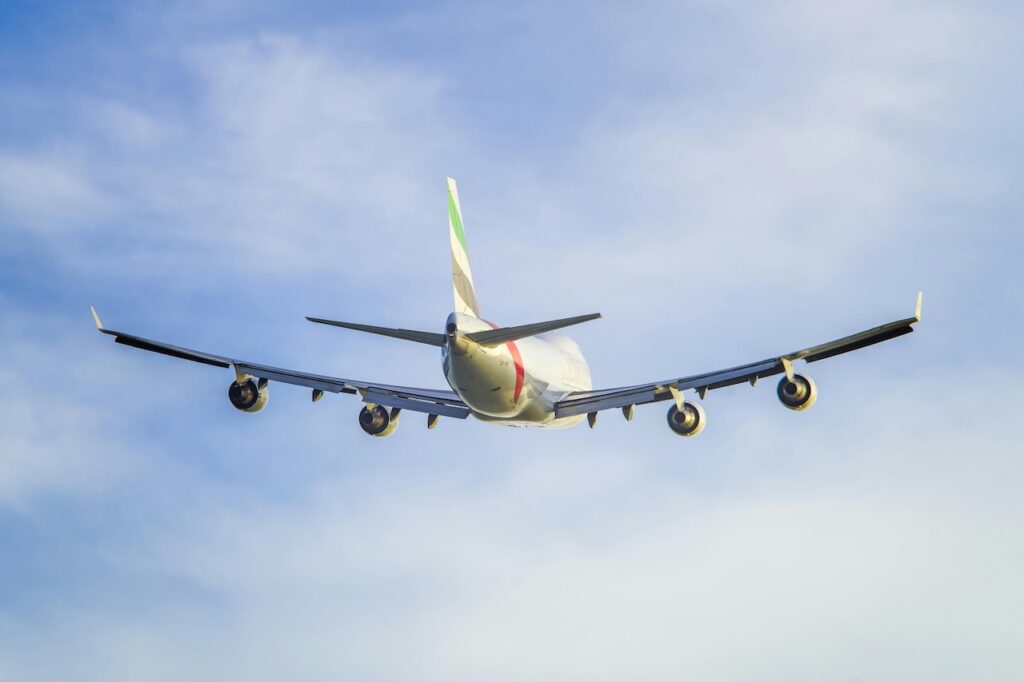
A plane won’t fall from the sky if its engines stop.
Commercial aircraft are built like giant gliders. Even when the engines are producing no thrust, the shape of the wings (known as the airfoil) keeps generating lift as long as the plane has forward speed.
Instead of simply dropping from the sky, the aircraft would enter a controlled glide. It will continue to move forward and descend slowly.
To give you an idea of how effective that glide is:
A typical commercial airliner, like a Boeing 747, can glide about 15–20 miles for every mile of altitude it loses.
At 30,000 feet (roughly six miles up), that means a potential glide range of 90 to 120 miles. That’s plenty of time for pilots to restart engines, plan a landing, or reach an airport.
Aircraft engineers plan for every eventuality, including total engine failure. Planning doesn’t mean this is a likely scenario. In fact, it’s incredibly rare.
Why every aircraft is a glider
Every plane (from a small training aircraft to the largest commercial jet) flies because of lift and drag. The wings deflect air downward, generating an upward force that keeps the aircraft in the air. The engines provide thrust to overcome drag and keep the plane moving forward. (Learn more about the science of flight.)
When the engines stop, the thrust disappears, but lift doesn’t. The plane continues to move through the air, and the wings still generate lift. The only difference is that the plane gradually trades altitude for airspeed.
Pilots regularly practise engine-out gliding in flight simulators as part of their training. It’s a routine procedure they learn early on. It’s refined through years of safety drills.
What pilots do if engines stop
If all engines fail (which is extremely rare), pilots follow a calm and well-practised procedure.
Here’s the process:
- Maintain control: The pilot ensures the plane is flying at its “best glide speed,” the speed that maximises distance and control.
- Assess the situation: Pilots check engine instruments, weather, and potential restart options.
- Attempt restart: Pilots follow specific restart checklists for each engine type. Many engine failures are temporary (for instance, due to fuel imbalance or icing).
- Communicate: The crew alerts air traffic control, who immediately assist with nearby airports or runways.
- Plan for landing: If restarts fail, pilots look for the best possible place to land safely. This might be an airport close by, a long runway, or, as a last resort, a flat area of land or water.
How rare are engine failures?
The chances of a total engine failure in a modern jet are astonishingly low. That’s a testament to the quality of aircraft engineering and maintenance teams.
Modern turbofan engines are built with layers of redundancy and precision engineering. According to Boeing, the rate of in-flight engine shutdowns is fewer than one per million flight hours.
Even when one engine does fail, commercial aircraft are designed to fly perfectly safely on the remaining one. Twin-engine aircraft must meet something called ETOPS certification. This means the plane can continue to fly safely for hours on one engine in an emergency
Of course, engine failures can happen. And they do. But the chances of all the engines on your plane losing power are incredibly rare.
What passengers would notice in a full engine failure?
If the engines stopped, what would you, as a passenger, experience? The truth is, probably much less than you think.
You’d hear the engines spool down as they do when you start to descend. The noise level inside the cabin would drop significantly.
The plane might feel slightly quieter and smoother, but you wouldn’t feel the plane drop (which may be a bit of a surprise). The aircraft would keep flying and begin to naturally descend gradually, according to the plane’s L/D ratio.
The British Airways pilot chose to let passengers know what was happening, but the pilot’s first priority is to fly the plane and follow procedure. In most cases, you’d never even realise a temporary loss of thrust had happened.
Planes don’t fall from the sky
If all the engines on a commercial aircraft stopped, the plane would not fall from the sky. It would glide, controllably and predictably. The gives pilots time to potentially restart the engines or make a plan for landing.
The design, engineering, technology in every plane – and the training of every pilot – make engine outs incredibly rare. They’re also survivable.
The plane you’re in has been tested and built to fly, even without engine power. Sit back, relax and enjoy your flight.
Please share this article with anyone who might benefit from it.
FAQS
No, if the engines on your plane stop for any reason the pilots can safely guide the plane to the ground. Every plane is, as we’ve read about in the article a glider. If the engines stop for any reason, your plane can safely glide for 50 or more miles or more (depending on its size).
There are several things that could cause an engine failure. It could be a fuel issue, a mechanical problem, or some external factor (like a bird strike or icing). Engine failures are rare, but they do happen. Thankfully, planes can fly safely on a single engine if this happens. The chances of multiple engines stopping at the same time are very small.
Planes can glide for 50 miles or more if both engines fail. This is an incredibly rare and unlikely scenario, but if it happens, your pilots could glide the plane safely to a nearby airport.