In brief
- Turbulence is a common fear for children who are nervous about flying
- Explaining what causes turbulence can help children to overcome their fears
- There are practical things you can do to calm and soothe your child while flying through turbulence
Why turbulence can be scary for kids
Turbulence is a common fear for nervous flyers and can take children by surprise on their first flight. This turbulence guide for kids is written for parents (by parents) and offers simple explanations and practical tips to help children cope with bumpy skies.
We all know that turbulence is a normal part of every flight. Understanding what causes it and why can help children feel calm, informed, and even curious about what’s happening outside the window.
How to explain turbulence to children
Children are naturally inquisitive and will ask questions, so make sure you have the answers. The key to explaining something like turbulence is simplicity.
You don’t need to go into meteorology. Instead, try to find ways that you can frame turbulence in terms and with reference points that children will already understand.
Here are three ways you can use to explain turbulence:
- The car-on-a-road analogy: “Turbulence is like bumps in the road when you’re in a car. The road isn’t perfectly smooth, and sometimes the car jiggles a bit. In the sky, the air isn’t perfectly smooth either, so the plane jiggles too.”
- The boat-on-waves analogy: “Have you ever been in a boat when it went over little waves? The plane is like that – riding the air instead of water.”
- The jelly model: “Take a look at this jelly on a plate. Turbulence is a little bit like the movements that happen when you push it. You can see the waves that shake, but in the end, it returns back to normal.”
If you have a plane model, you can use it to show how the plane moves up and down and side-to-side. Explain how bumps in the cabin are exaggerated by the speed you’re travelling. In the end, the plane may move up and down tiny amounts.
Planes are designed with inherent stability. That means that even if turbulence interferes with this, the plane will return to the same position.
Always emphasise to children that the plane is built to handle turbulence. Just like a car, a plane is built to handle bumps in the sky. Pilots usually know it’s coming, expect it, and can manage it safely.
Why kids might worry about turbulence
Understanding the “why” behind children’s fear helps you respond calmly. Instead of dismissing your child’s fears, explore them calmly. Ask them what has caused the fear and try to unpack it calmly and reasonably.
Some of the reasons children may fear turbulence include:
- Loud noises: Turbulence can create noises, with movement of the flaps, landing gear, rattling trays, and overhead lockers.
- Unexpected movement: Turbulence isn’t predictable and results in random drops or bumps.
- Uncertainty: It can feel frightening if you don’t understand what’s happening to the plane.
- Mirroring parents’ anxiety: Children pick up on adult stress quickly. If you, another family member or flying companion, is an anxious flyer, this can influence a child.
- Negative images of flying: Some children may have seen cartoons, films or played games that involve plane crashes.
One of the things many children struggle to understand is why the plane doesn’t fall from the sky. It seems to defy the logic of gravity, which can be scary. Don’t wait until you’re on your way to the airport to talk about turbulence. Instead, make it a part of conversation in the weeks building up to the flight.
Tips for talking to kids about turbulence
If your child experiences an acute fear of flying, it’s worth learning about the causes of turbulence and why your plane is built to withstand incredible forces. You don’t need to be an engineer or aviation expert to grasp the fundamentals, but explaining the principles confidently can give a child (and any other nervous flyer) more confidence.
Children cope best when they know what to expect. A little preparation can go a long way to increasing confidence. If you need a primer on the science of flight, we can help.
Here are some ways to chat about turbulence:
- Introduce turbulence as normal: The reality is that turbulence is likely to be present on every flight during takeoff, cruise, or landing. There’s no way you can avoid it, and nor should you. Phrases that might work include: “Sometimes the plane might wiggle a bit – that’s just the air moving.”
- Keep it positive: Your child’s fear is real, and there’s a risk it could get worse if you’re not sensitive. Avoid words like “scary” or “dangerous.” Use “bumpy” or “wiggly” instead.
- Answer questions honestly: Kids don’t want to be misled and can spot sugar-coating a mile away. Do your research before you speak to them, and keep explanations simple but factual.
- Explore turbulence together: If you don’t know the answer to a question, don’t lie or pretend. Instead, turn it into an opportunity to research together.
- Practise with games: Smaller children may benefit from a bit of airplane role play (which can be fun!). Pretend to be on a “bumpy bus ride” at home so they learn to laugh about jolts.
- Reinforce during daily rides: The majority of turbulence you feel in a plane will be similar to that you experience in a car, bus, or on a train. If you’re travelling with a child, explain how the bumps you experience are similar to turbulence. Recognising the sensation can help in tackling turbulence fears. This can help them adapt and accept anxiety is a natural part of travel and isn’t anything to be afraid of.
What to do during turbulence – 4 practical strategies
When you’re on the plane, your child’s anxiety can peak. Here are 4 practical strategies to help your child stay calm during turbulence.
Before we go into the details, a little advice. Children take their cues from parents and other loved ones. If you’re gripping the seat or looking terrified during turbulence, they’ll naturally assume that something is wrong. You need to model behaviours, including calm breathing and keeping a relaxed posture. (If you’re a fearful flyer yourself, sometimes flying with a nervous child can actually give you more confidence.)
Here are 4 strategies for supporting a child during turbulence.
Strategy #1: Use distraction
There’s no need to limit snacking or screen time on a flight. Distraction can work well for children and adults, taking our attention away from turbulence. (Here’s our guide on what to pack to reduce in-flight anxiety.)
- Books, colouring, or puzzles: Younger children can use art books to entertain them, keeping their hands and minds busy.
- Headphones with music or audiobooks: Headphones can block noise and provide comfort for nervous children.
- Games: If you’re sitting next to the nervous flyer, simple games like “I Spy,” counting clouds, or storytelling can shift focus away from bumps and provide confidence.
- Entertainment systems: An iPad, Kids’ Kindle, or other gaming system can provide hours of entertainment. Be sure to pre-load games as the wi-fi signal may not be available on board (and can be expensive if it is).
Strategy #2: Turn it into a learning moment
For older children, you can involve them in the science. This will take a little research on your part, but it can really help to unlock the magic of flying – something we take for granted, but was a dream for humans for thousands of years:
- Talk about pilots: Talk to your child about the role of a pilot, the responsibilities, training, and ongoing investment in their education. During the flight, discuss how pilots talk to air traffic control, the role of the flight planner, and how pilots monitor weather conditions visually to avoid things like storms.
- Thrust, lift & drag: Explore the forces at work during aviation. Explain how the wings are designed to flex and bounce with the air. Talk about the years of testing and certification.
- Rate turbulence: Don’t ignore turbulence, approach it like a scientist. Talk about the sensation, the severity, and how it makes you feel. Instead of fearing the bumps, feel them and talk about it.
- Describe what you see: Turbulence is normal to the cabin crew. Point out that even flight attendants keep serving drinks during turbulence because it’s a normal part of flight.
Strategy #3: Increase comfort
If you’re a nervous flyer, it’s natural to tense up during turbulence. Staying cool and comfortable can help to reduce some of the physical sensations of turbulence.
Ensure that:
- Seatbelts snug but not tight: Make sure children feel secure, but that seatbelts aren’t too tight to restrict movement.
- Layer up and down: The temperature in planes can change on the ground and in the air, so dress your children (or if they’re old enough, ask them to dress) in layers so you can easily take off or put on clothes to keep them at a comfortable temperature.
- Favourite blanket, soft toy, or hoodie: Cuddling a blanket or wearing a favourite item of clothing provides familiarity and reassurance.
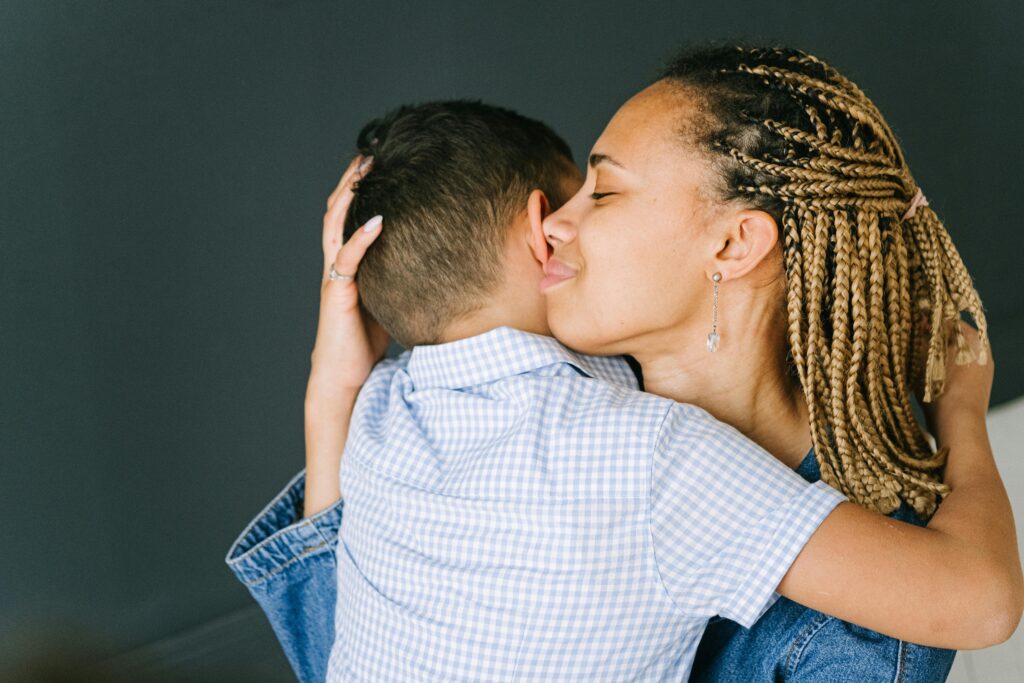
- Physical support: Hand-holding or a gentle arm around the shoulder can reassure younger kids.
Strategy #4: Focus on breathing
Breathing techniques can help children and adults who are experiencing anxiety. When chatting with children, you can use these strategies to teach simple, playful breathing to calm nerves:
- Balloon technique: Blow up an “imaginary balloon” slowly and gently. This can be very effective (and quite funny, too!).
- Bubble blowing: Pretend to blow bubbles, taking deep, slow breaths in and out. This can slow the breathing and makes the action more conscious.
- Box-breathing: Use “box breathing” as a counting game (inhale 4, hold 4, exhale 4, hold 4). This is a proven technique for adults that can work well for children, too.
You can find lots of techniques in out free Calm Flight Toolkit and on our Help Desk pages.
What not to do during turbulence
These strategies are evidence-based and effective ways to help children (and adults) stay calm during turbulence. Even so, your child may still experience fear. It’s vital not to dismiss their fears as this can invalidate feelings. Acknowledge their nerves, but provide reassurance.
As adults we can sometimes use humour to deflect from issues, but this can be tricky for children – especially younger ones – to understand. Even joking about crashes can feed anxiety, so be careful with your words in the days and weeks leading up to the flight and on the flight itself.
Try to keep things simple and age-appropriate. Try not to over-explain using technical terms, because too much detail can overwhelm rather than reassure.
You know your child and what will work best for them. Trust in your skills and knowledge as a parent to find the best and most effective strategies for stress reduction.
Turning turbulence into a positive experience
Turbulence isn’t pleasant for any of us, but you’re going to get through it together – and that achievement needs to be recognised and celebrated. We believe that with the right approach, turbulence can become a chance to build resilience:
You should celebrate the bravery. Praise children for staying calm or trying coping strategies. They’ve achieved something that takes courage and bravery, and that’s a big thing.
You might want to provide a small reward after landing. You can link turbulence coping to a positive outcome. It’s up to you, but an ice cream, a small toy, a book, or a special outing can go a long way to reinforcing pride in an achievement.
Fear of flying can be a temporary problem, not a lifelong fear
Children rarely remember turbulence as vividly as adults. What they’ll remember most is how you responded. By staying calm, offering simple explanations, and keeping them engaged, you’re teaching them not just how to fly confidently, but how to cope with uncertainty in life.
Fear of flying isn’t rational, but it is real. Remember: planes are built for turbulence, pilots are trained for it, and with the right tools, children can learn to handle it with confidence, too.
If you’d like more practical, evidence-based tools, you can download our Calm Flight Toolkit.
Please share this article with anyone who might benefit from it.
FAQs
It’s important to explain what turbulence is and why its not a danger to passengers or the plane. Try not to get too technical with explanations, instead find relatable ways to explain it. Describing turbulence as like a boat no waves or a car on a rocky road are both realistic and relatable.
Fear of flying can be hard to hide, but doing so can help to reduce the likelihood that your fears will influence your child. Sometimes faking confidence can help you and it will certainly help your child. If you’re afraid off flying, why not turn it into an opportunity for you and your child to learn more about how planes fly, what turbulence is and why it’s not a danger to the plane.
Each child is different but many children who are afraid of flying – and worried about turbulence – lose this fear as they get older. This often happens as they become used to the sensations and sounds of flight, building positive associations not negative ones. If you’re worried that your child is developing a flying phobia it may be worth speaking with a professional.