
In brief
- Virtual reality therapy (VRET) has shown promising results as a treatment for fear of flying
- VRET uses exposure therapy to reduce anxiety around flying
- If you’re considering VRET, always use a trusted operator
How does virtual reality therapy for flying anxiety work?
Virtual reality (VR) therapy combines immersive simulation with psychological techniques to help you tackle your fear of flying. VR enables you to experience the sensations of flying, but in a safe, controlled environment.
Virtual reality therapy is cheaper than a flying lesson or an airline-run fear-of-flying course. Early evidence shows VR could be one of the most powerful tools yet for reducing flight anxiety, but you’ll need to enter into it with your eyes open (literally and metaphorically).
We explore what VR therapy for fear of flying is, how it works and why you might want to consider it.
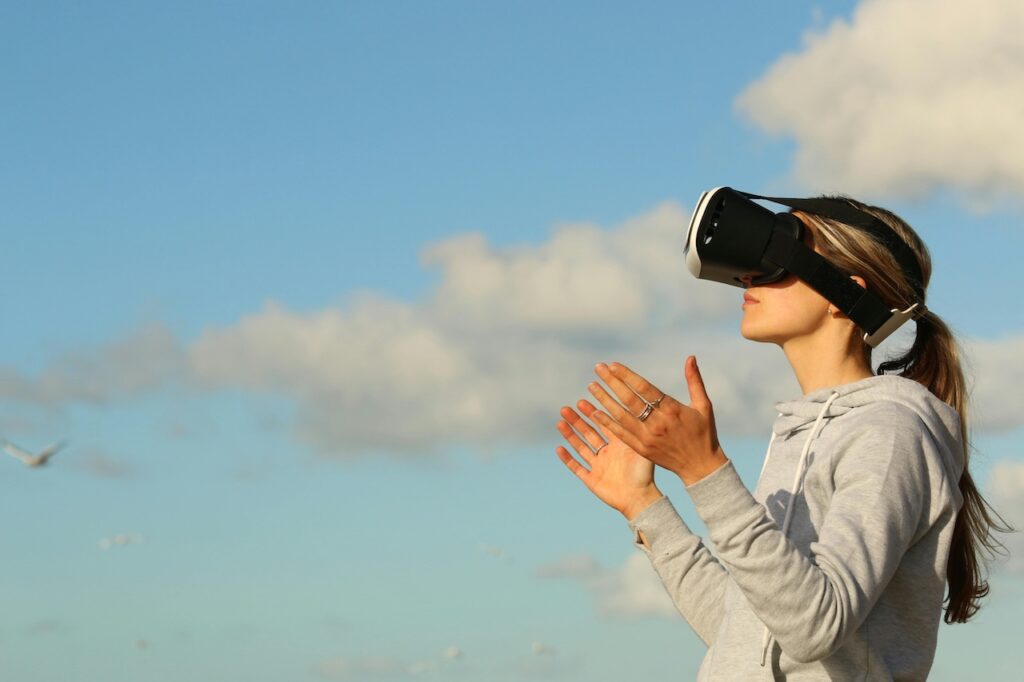
What is VR therapy?
Virtual reality therapy uses a headset to create immersive, 3D simulations of environments. For fear of flying therapy, these simulations can be places or situations that trigger fear, like takeoff, landing, or turbulence.
Unlike imagination-based exposure therapies (like visualisation), VR is truly immersive. Strap on the headset and you’ll get vivid visual, auditory, and sometimes tactile cues.
The environments can be ultra-realistic, meaning people can feel “present” in the environment. It feels really real, but the illusion can be broken at any time by removing the headset.
VR therapy was first used in the 1990s for treating people with post-traumatic stress disorder (PTSD). Today, VR therapy is successfully used to treat a range of phobias, including fear of heights, spiders, public speaking, and flying.
VR therapy is a specialist service. Sessions are typically guided by a therapist, who helps patients use coping strategies while experiencing the simulation. This gives patients confidence that the therapy is being delivered by a professional and is safe and effective.
How VR works for phobias
Phobias are maintained by avoiding the trigger. If you’re afraid of spiders, for example, you’ll avoid situations where you might come into contact with one. This works, up to a point, but avoidance can work against you.
Each time you avoid flying, your brain “learns” that avoidance keeps you safe. This reinforces the fear, making it harder to get on a plane the next time you need to.
VR therapy is a form of exposure therapy that aims to break this cycle by gradually confronting the feared situation in manageable steps. Over time, and through exposure, the things that made you nervous and anxious lose their power and become more manageable.
Instead of placing you in a plane, VR provides a safe and controlled way to expose yourself to your fears. During a VR therapy session, you work through the levels of intensity:
- Begin with mild scenarios, such as sitting at a gate, hearing boarding announcements.
- Progress to more intense triggers, including takeoff acceleration, turbulence.
- Pause or repeat stages as needed.
VR exposure activates similar emotional and physiological responses as real-life exposure. Your brain treats the VR situation in the same way, eliciting the same responses from the senses.

How VR therapy tackles flight anxiety
Fear of flying isn’t usually caused by a single thing; it has multiple triggers that combine to create anxiety. Triggers can include a lack of control, turbulence, claustrophobia, engine sounds, or the weightless feeling at takeoff or the speed of landing.
Advanced VR therapy can recreate each of these in stages in detail, providing a virtual run through of an entire flight, including:
- Arriving at the airport: walking through security, waiting at the gate.
- Boarding: entering the cabin, hearing safety announcements.
- Takeoff: engine roar, acceleration, lift-off.
- Turbulence: light, moderate, and even severe turbulence can all be simulated (if required)
- Cruise: normal flight sounds, occasional turbulence.
- Landing: descent bumps, landing gear noises, touchdown.
VR therapy is most effective when combined with the guidance of a professional. Before you begin, a therapist will speak to you to understand your fears and personalise the simulation to you.
You should never be on your own. Therapists combine the simulation with grounding, breathing, and mindfulness exercises. The purpose is to calm the fight-or-flight response, effectively training the brain to recognise that these triggers aren’t dangerous.
Does VR therapy really work?
The scientific evidence for the efficacy of virtual reality simulation to treat fear of flying is growing.
- A 2023 meta-analysis of studies found VR exposure therapy was as effective as traditional exposure for phobias, including fear of flying.
- A 2019 study found VRET was as effective as other forms of exposure therapy.
- A retrospective study into VR treatment for fear of flying had lasting positive impacts.
Airlines Lufthansa and KLM have experimented with VR programmes to help staff and passengers.
We’re at the early stages of VR therapy. While research is ongoing, we can see that the results suggest VR is a viable and effective treatment for aviophobia. But you’ll need to choose a trusted provider that can help you.
Considering VR therapy yourself?
If you’re interested in VR for flight anxiety, it’s worth doing your research. The current treatment space is unregulated, so you’ll need to ensure you find a provider that can match technical support with the expert therapy you need for it to be effective.
Here are some things to consider:
- Check with a GP or therapist. VR may not be suitable for everyone, for example, those with epilepsy may not be safe to use VR headsets. A quick chat with a medical professional can put your mind at rest.
- Look for accredited providers. Do your research and find a provider with professional credentials. In the UK, NHS pilot schemes and some private clinics now offer VR therapy.
- Check reviews: Read online reviews from real people about their experiences.
- Speak to the therapist before booking: VR therapy won’t be cheap, so take some time to speak to the therapist delivering the training before booking. Do you like them? Do you trust them enough to share your fears?
- Combine with coping skills. Before going, prepare yourself. Use breathing, grounding, and mindfulness alongside VR.
- Treat it as training. Establish clear and reasonable expectations for VR therapy. The goal isn’t a “quick fix” for your fear of flying, but gradual desensitisation. You’ll need to be prepared to put in the work.
Can VR therapy help me overcome my fear of flying?
Evidence suggests that VR can significantly reduce phobic anxiety. It can often match other treatment methods in its effectiveness. While VR therapy isn’t universally available, it’s becoming cheaper and more accessible.
Before booking a VR therapy session for fear of flying, be sure to do your research. Find a provider that’s operated by a trained therapist who can provide the professional guidance and support you need.
Virtual reality therapy should be used as part of an overall strategy to tackle your fear of flying. Don’t forget to visit our Help Desk and download our Calm Flight Toolkit.
Please share this article with anyone who might benefit from it.
FAQs
Virtual reality therapy provides a safe way to experience flight. It uses the principles of exposure therapy (gradually exposing your mind to situations that you may find trigger anxiety) to help you understand that they’re safe and normal. During virtual reality therapy you’ll be able to experience things like takeoff, landing and turbulence. Because of the immersive nature of VR, your brain is likely to treat the situation in the same way as it would a real flight. Over several sessions, the hope is that the triggeers of anxiety begin to lose their power.
There is a growing body of evidence to show that VR therapy can work well for some people as part of a structured programme. In the exmples highlighted in the article, the therapy was guided by a professional therapist – something we would recommend. A professional therapist can provide structure the sessions and expert adivce on how and when to increase intensity. This will ensure that sessions have the greatest impact but are also safe and structured.
We recommend checking out online reviews and recommendations. You can also speak to the provider and ask them about the structure of the sessions and informaiton on the professional support you’ll receive. Virtual reality therapy isn’t cheap, so do your research before selecting a suitable provider.