In brief
- Autopilot is a collection of computers, sensors, servos and flight control systems that help the aircraft to follow a course and altitude defined by the pilot
- The system works by constantly comparing the aircraft’s position, speed and attitude with the targets and making any adjustments needed
- Pilots are in control at all times, including selecting modes and monitoring performance – and they can step in and disconnect the system any time they want or need to
What autopilot actually is
Autopilot is often imagined as a mysterious black box that somehow “flies the plane on its own”. In reality, it is better understood as a highly sophisticated control system.
In simple terms, the autopilot system compares what the aircraft is doing now with what it is supposed to be doing next. It’s checking multiple systems each second and making adjustments to maintain the correct course and altitude.
While published in 2016, Bjorn’s Corner: Flight control, Part 4, provided a fantastic description of how Fly-by-Wire systems work, written by a pilot.
The autopilot doesn’t think or make decisions – that’s the job of the pilots. The system uses predefined targets and its own internal logic. Pilots will specify the course, altitude and speed. The flight management system often provides the agreed route, climb profile (including step climbs) and descent path.
Autopilot is an incredibly advanced, robust and reliable system that supports pilots rather than replacing them. At all times, pilots are in control and can switch off the system if they want to.
In this article we’re going to provide a simple and easy to understand explanation of what autopilot is, how it works and how it’s always working to keep you and other passengers safe.
The sensors that make it possible
A plane’s autopilot system makes its decision on data, which it pulls from a huge range of sources inside the plane, including:
- Inertial reference systems which track attitude, acceleration and movement
- Air data computers provide speed, altitude and vertical speed.
- GPS and radio navigation inputs that pinpoint the planes position anywhere on the earth
- Gyroscopes that detect roll, pitch and yaw changes
The constant stream of data enables the autopilot to understand what the plane is doing. It can compare what the plane is actually doing with what it should be doing.
The autopilot can work at a level of speed and accuracy that humans can’t. When adjusting course, a human pilot may make slightly more exaggerated corrections that need to be adjusted. The computer operated system works with a greater degree of precision, which is better for the plane, its passengers and even pilots who can let the system do the work.
How autopilot controls the plane
The autopilot system is connected to a whole range of servos and actuators that control the plane’s direction and altitude. It can control speed with the autothrottle and autothrust system.
Depending on the movement required, it may move the ailerons to control roll, the elevator for pitch, and the rudder for yaw control.
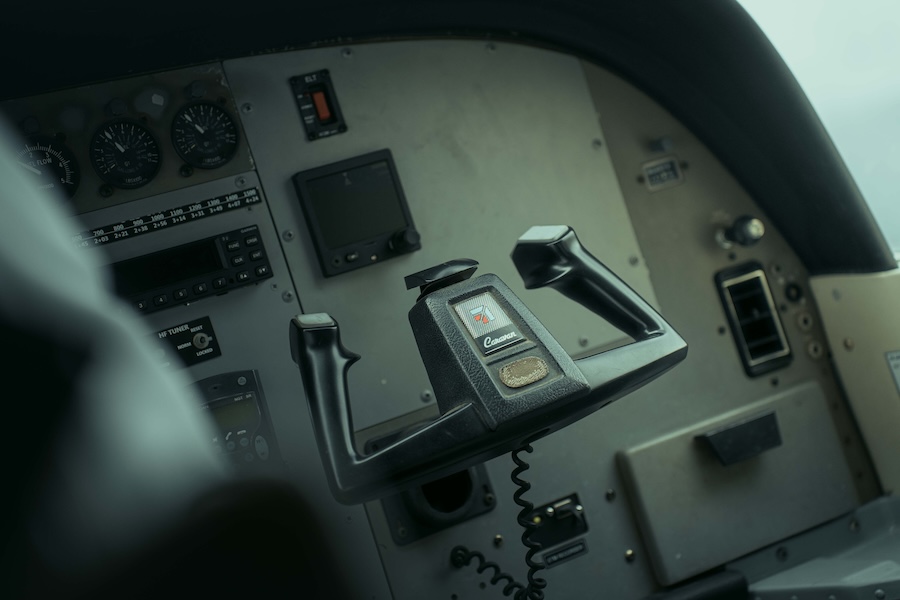
In modern Airbus aircraft, the systems are directly connected to fly-by-wire computers, so the pilots won’t see any movement in the cabin. In Boeing aircraft, the yoke moves automatically, showing the pilots what the autopilot is doing.
The precision and accuracy of autopilot means that passengers, too, won’t notice much. Flying with autopilot can often result in smoother flights as the system works at a level of precision human pilots can’t.

The importance of autopilot modes
It may seem that autopilot is exerting a great deal of control. It is, but it’s operating with a specific mode that’s set by the pilot. The autopilot is always doing what it’s told, not acting independently.
If the pilot selects heading mode, the aircraft will maintain that heading even if the route plan filed says something different. On the other hand, if they choose managed navigation (Lateral Navigation or LNAV) and Vertical Navigation (VNAV) the system will follow the entire programmed route, including turns, altitude changes, and speed restrictions.
Autopilot is never in control in the way that some nervous flyers imagine. Pilots define what the system is doing. The system is always following explicit commands within tightly defined logic.
Why pilots are always in control
Pilots understand what the autopilot system can and can’t do. It’s called mode awareness and it’s a vital part of training. If the pilot notices that the autopilot isn’t acting as it should, they must switch it off and take control of the plane.
Automation is there to handle what’s known in aviation as the precision-control layer (that’s specialised, high-accuracy maneuvering). This frees pilots up to focus on the operational aspects of flying.
Pilots will always decide when automation is going to be beneficial and when it’s not. During light turbulence, for example, the autopilot system may be best at smoothing out the ride. In moderate turbulence, the pilot may use her experience to keep the plane as smooth, stable and safe as possible.
Autopilot isn’t about replacing pilots, but about freeing them up so that they can focus on the most important and riskiest parts of flying.
What happens if autopilot fails
Autopilot systems can fail. If the system detects an error with a sensor, for example, it will automatically disconnect and alert the pilots. At this point, the pilots will take control. At no point during this process is the plane at risk.
Like everything in commercial aviation, there are layers of protection in every plane. Most planes have two or three autopilot systems on board. If one layer of automation develops a fault, the plane can still be flown safely.
Some anxious flyers are worried about autopilot failures because they don’t understand the limitations of what the system can do. Planes are built around the fundamental principle that humans may need to take control at any moment. In modern planes, they can.
If you’re worried about aviation, understanding how planes fly, what causes turbulence and why it’s not a safety issue can all help you overcome your fear of flying.
Please share this article with anyone who might benefit from it.
FAQs
In some planes, autopilot can take off, but pilots prefer to control these phases. Instead, autopilot is often switched on when the plane reaches cruising altitude. Some modern planes are fitted with Autoland systems that can guide the aircraft to touchdown. Pilots can choose to use autopilot or not and are literally seconds from taking control if they need to.
Yes. On most commercial flights, autopilot will do most of the flying. This frees pilots up to essentials like navigation, weather, radio communication, fuel checks and arrival planning. Pilots will regularly perform takeoff and landing to keep their skills sharp. Autopilot is a tool pilots can choose to use, but it won’t replace them.
The autopilot doesn’t choose the mode, pilots do. During every flight, pilots constantly monitor the flight mode annunciator. This is the display that shows what the system is doing. If the wrong mode is selected, they’ll put it right immediately. As a passenger, you’d never notice.