In brief
- Ryanair is a budget carrier and its no-frills approach – and strict rules – can trigger anxiety in some travellers
- While flights may be cheap, Ryanair has a strong safety record and you can fly the budget airline with confidence
- Understanding how Ryanair operates, and preparing for the “Ryanair experience” can help to reduce stress
Is Ryanair safe?
Yes, Ryanair is safe! The budget airline has been operating since 1985. Today, Ryanair operates over 3,800 daily flights from 95 bases. The budget carrier’s safety record is hugely impressive.
So why are so many people afraid of flying Ryanair? Maybe you’ve read about the passenger almost being sucked out of the window in what’s widely considered a freak accident. Or maybe you’re an anxious flyer looking for reasons not to fly.
I recently flew on Ryanair. As a nervous flyer, I was worried about what the experience would be like, but I was pleasantly surprised. It was a speedy, streamlined and safe experience.
What flying with Ryanair is really like
Flying with Ryanair is actually a smooth and stress-free experience – if you spend time understanding the rules and following them to the letter.
Here are some of the lessons from my trips on Ryanair.
- Booking: Booking is simple, but remember the first price you see isn’t what you’ll pay with all the add-ons. Always check and double check your booking as making changes can be expensive and frustrating. If you want to shop around, always use a comparison site.
- Understanding the dynamic fare system: Ryanair uses a dynamic fare system. This means that prices change based on a range of factors including seat availability, demand, and how far in advance you book. Busy flights cost more, basically.
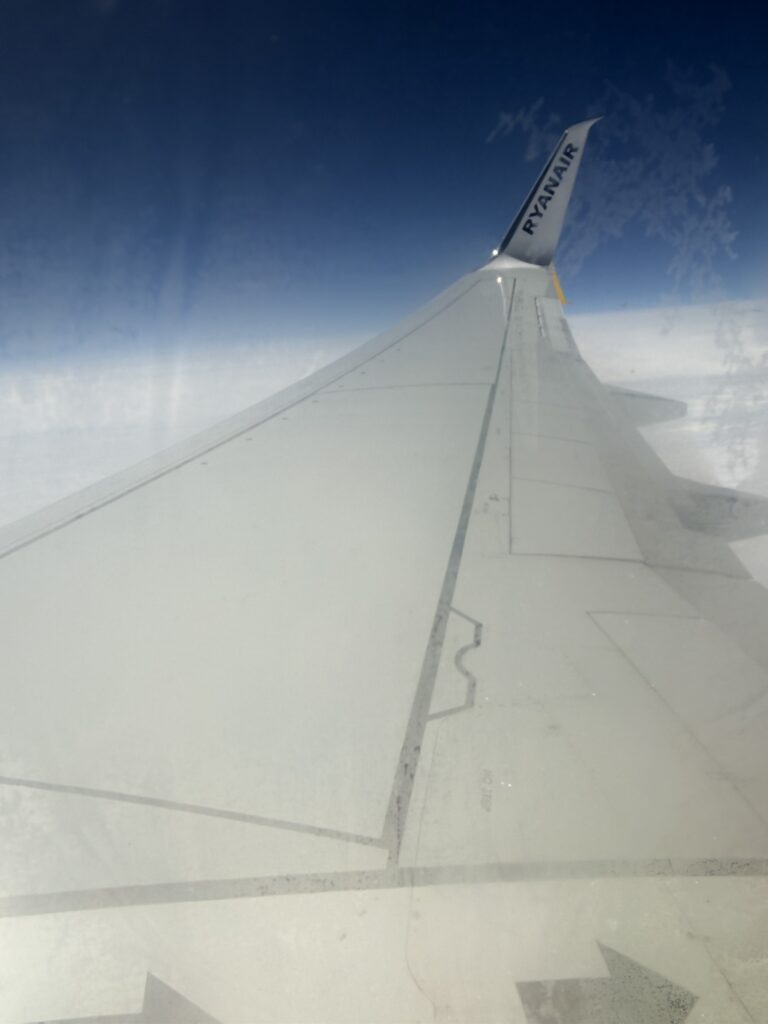
- Seat selection: Nervous passengers should select seats as close to the wing as possible. The exact seating arrangement of your plane may differ, but 18F was over the wings and offered a smooth ride – even during some turbulence.
- Download the app: Ryanair has gone 100% digital which means you’ll need the app. One trick is that you can take a picture of your boarding pass, which means you won’t need to use your data allowance to access the app if you’re in a foreign country.
- Priority or not?: Priority enables you to board the plane first, which isn’t much of a benefit. However, it does mean that you can bring two cabin bags, including a small personal item (40 x 30 x 20 cm) and a larger 10kg bag (55 x 40 x 20 cm) that must be stored in the overhead locker.
- Measure everything twice: Ryanair makes a huge amount of cash charging those whose luggage doesn’t fit in its luggage boxes. Even a few millimetres can result in a fee, so don’t take the chance. Invest in a tape measure and luggage scales (or, even better, get luggage in the right size!).
- Don’t worry about getting there early: Ryanair check-in is mostly automated (at modern airports) and is very quick.
Our advice: Read the Ryanair rules before booking and *definitely* before travelling.
Why does flying Ryanair feel more stressful?
Ryanair – and its outspoken CEO Michael O’Leary – have cultivated Ryanair’s image as a cut-price airline, using his media profile to amplify this. The gamble is that, when it comes down to it, travellers are hugely price conscious and will go with the cheapest price for their trips.
While the ticket price may be cheaper, the reputation Ryanair has developed can be triggering for those with anxiety.
Why? Let’s run through them.
#1: Price and safety
The first reason flying Ryanair can feel stressful is the false association between low price and low safety. Ryanair, as we’ve stated before, has a fantastic safety record and a modern fleet. Passengers can be confident in the planes and the pilots.
#2: Active enforcement
Ryanair’s crew are strict, enforcing baggage rules and regulations with apparent enthusiasm. This can put even the most hardened traveller on edge. The key is to measure, weigh and check your luggage before you enter the airport terminal.
#3: Airport location
To keep costs low, Ryanair often operates flights from smaller, regional airports rather than central travel hubs. While this can reduce flight costs, it can make travel to and from departure and arrival airports more expensive – and stressful.
#4: Gates and access
Inside airport terminals, Ryanair often operates from gates that are further away from the main building. This means that you can find yourself having to walk around a terminal. In smaller, regional airports that’s not a huge problem but in larger hubs, this can add time – and anxiety – to the journey.
#5: Baggage checks and boarding stress
We can’t dress it up too much, the Ryanair boarding process is stressful, but it is quick. When you arrive at the boarding gate, you’ll see two lines: one for priority and one for standard passengers. Priority get to board first, but the same stringent luggage rules apply.
Measure and weigh your baggage several times before you arrive at the airport, because if you get it wrong (and the attendants spot you) you’ll have to pay a fine.
#6: In flight experience
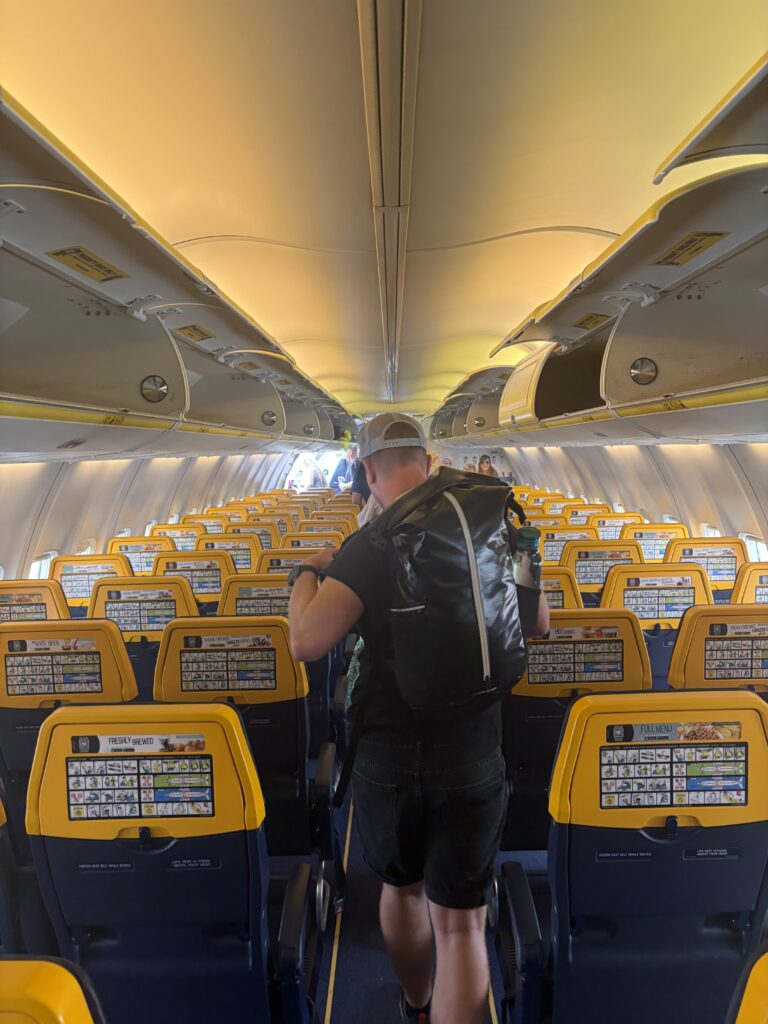
Flying Ryanair is a lot like a bus in the sky. Ryanair flights operate with a high seat density, packing in 189 seats on the Boeing 737NG and 197 seats on the Boeing 737-8200.
That means luggage and leg room can be cramped. The seats, too, aren’t the most comfortable – but you’re not on a Ryanair flight for the long haul.
This is the pay-off for cheap fares, but the density of travellers can impact the experience and exacerbate feelings of claustrophobia in some individuals.
#7: Bumpy landings
Ryanair operates what’s known as a “positive landing”. Instead of the smooth touchdown you might get with others, pilots bring the Boeing planes down with a purposeful bump.
There are lots of explanations for this (faster stopping on shorter regional runways, a safer stop that reduces the risk of skidding, and shorter landing gear on the Boeing fleet).
Many fearful flyers love a landing as it means the plane is down, but be prepared for a bump.
Does Ryanair experience more turbulence?
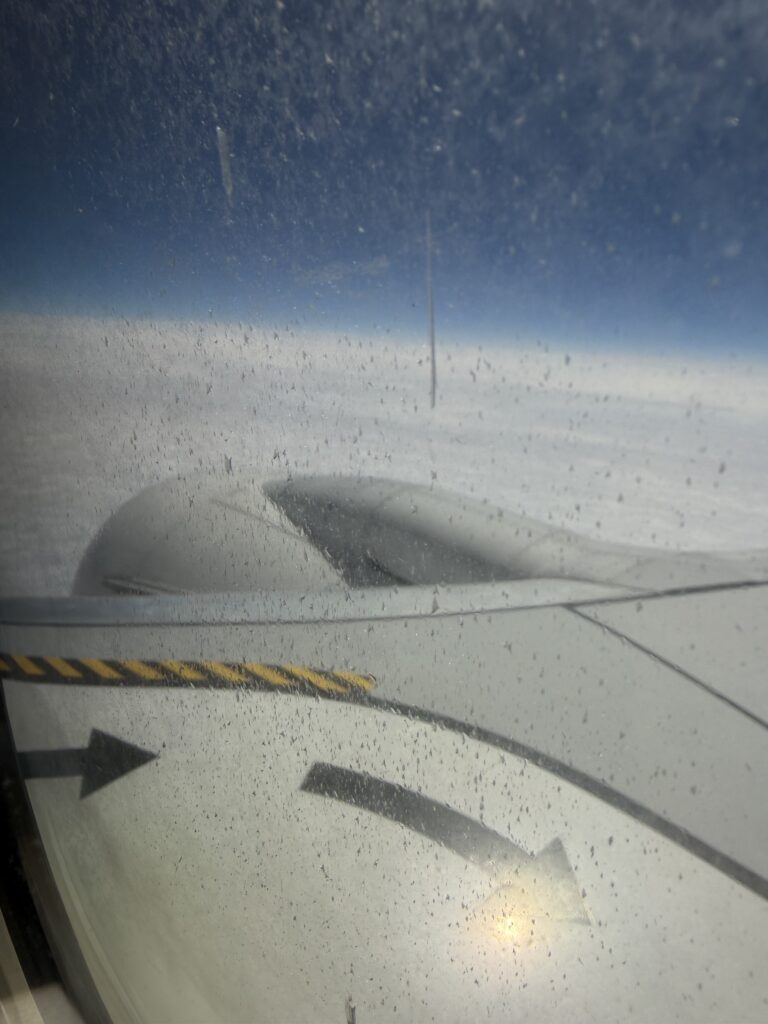
Ryanair flights don’t experience more (or less) turbulence than other carriers.
This is likely to be based on the perception of Ryanair flights being cheaper, but there’s no correlation between price and ride quality. Planes flying through the same skies, at the same time and at similar altitudes will experience similar levels of turbulence.
Anxious flyers may find that they’re more sensitive to turbulence when on a Ryanair flight. That’s likely to be because they’re primed to be triggered. But you can rest assured that Ryanair flights are no more or less bumpy than others.
Why do I feel more anxious before a Ryanair flight?
When you book Ryanair you’re signing up for the “Ryanair experience” – and that can increase anxiety.
The pay off for a slightly cheaper fare is a flying experience that can be slightly more stressful than other carriers. Nothing comes for free with Ryanair and the rules are super strict. But if you do your planning, prepare in advance and check any and all restrictions, you can minimise stress.
However you feel about the flight experience, Ryanair is safe to fly. Whether you’re at takeoff, cruise and at landing, you’re as safe as any other carrier.
Five ways to stay calm on your Ryanair flight
Anxiety can be part of the Ryanair in-flight experience, but there are ways that you can manage it. Here are five ways to stay calm on your Ryanair flight:
- Pack and prepare in advance: Your attitude to a flight – and your anxiety levels – are set before every flight. Packing and preparing for your Ryanair flight can put you in the best possible position to manage airport and in-flight stress.
- Learn breathing exercises: Controlling your breathing can help you to stay on top of anxiety at key trigger points, including takeoff, landing and during turbulence. You can learn more about breathing exercises in our detailed guide.
- Practice mindfulness: Mindfulness is a way of staying in the present moment, removing yourself from falling into negative thought patterns. Try it on the ground and put it into action in the air.
- Manage distractions: Cabin density and the fact that Ryanair flights regularly sell out mean you won’t have much space. But with distractions like noise-cancelling headphones, books, entertainment and anything else that can help you. Learn more about the power distraction.
- Count down with a timer: Ryanair is a short-haul carrier. Short flights are easier to manage and if you set a timer you can watch as the minutes tick down. Another thing to remember is that your flight time will contain around 30 minutes of slack (for taxiing on runways either side, and delays). So, a 2 hour flight will actually be in the air for around 1:30. You can check the actual flight times on your routes at Flight Aware.
For more support, advice and activities to help you cope with flying anxiety, download the Calm Flight Toolkit and check out the Help Desk.
Why I will fly Ryanair again
Ryanair is a low cost carrier that’s hugely successful because the prices it charges are low enough to reduce the stress of travel.
Will I fly with Ryanair again? Yes. The experience wasn’t as bad as expected and the price was cheap enough for me to cope with the compromises.
Flying with Ryanair is all about planning, preparation and understanding the rules, and regulations. If you can do that – and stay on top of your anxiety – flying with Ryanair doesn’t have to be stressful.
FAQs
Yes, Ryanair is safe. The airline has operated since 1985 and maintains an impressive safety record. The airline has a modern fleet and manages thousands of daily flights across Europe. Flying Ryanair might be stressful at times, but it’s definitely safe.
Ryanair uses a “positive landing” technique where the pilot brings the plane down with what we can describe as a purposeful bump. This isn’t the pilot landing “badly”, it’s actually a safety measure that allows for faster stopping on shorter runways and reduces the risk of skidding.
No. There is no correlation between ticket price, ride quality and safety. Ryanair aircraft fly the same routes and altitudes as other airlines, meaning they experience the same amount of turbulence. While planes may not experience more turbulence, if you’re stressed you may perceive turbulence as stronger than other carriers.
Yes. Ryanair has a strong, ongoing safety record. Pilots receive specialist training before becoming qualified pilots and ongoing training to maintain their skills.
No, Ryanair operates a modern fleet comprising both Boeing 737NG and Boeing 737-8200 aircraft. In fact, Ryanair’s fleet is one of the most modern in Europe.
No. This is a common misconception because people believe that lower ticket prices mean lower safety standards. Like all budget carriers, Ryanair operates under the same safety regulations as any other airline and is as safe.
Anxiety often occurs because people make a false association between low prices and low safety. This is combined with the “Ryanair experience”, which includes strict baggage rules and the use of regional airports, which can increase stress. Strict regulations mean that many passengers live in fear of being hit with extra charges and fines.
Absolutely. You can manage your anxiety by preparing in advance. Some things you can do include packing, measuring, and weighing your luggage early, practicing breathing exercises and mindfulness, bring personal distractions, and use a timer to track your flight duration to stay grounded in the present.