In brief
- Anticipatory anxiety can spike in the hours and minutes leading up to a flight
- You need to find ways of bringing your body and mind back to the present – using breathing, grounding and mindfulness techniques to help you restore calm
- Many people find anxiety peaks pre-departure and actually gets easier when they’re on board (there’s a psychological reason for this!)
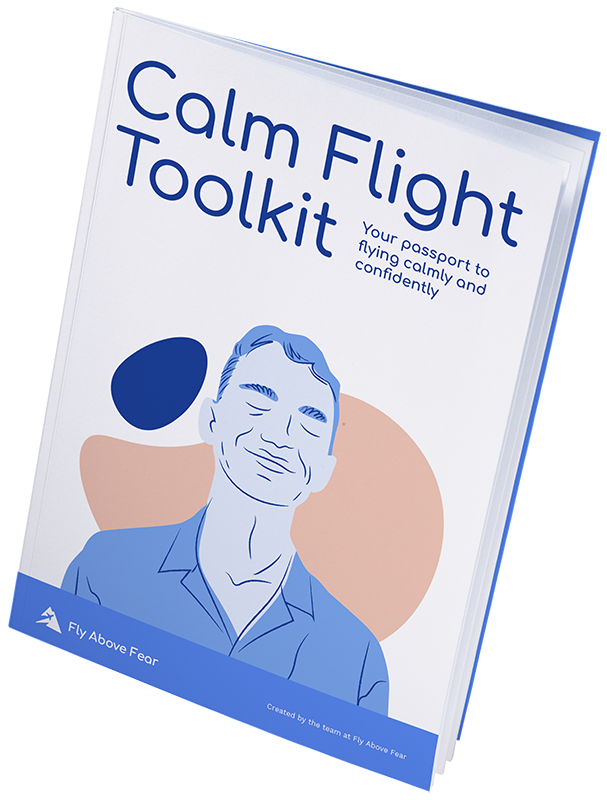
- Fly Above Fear was created to help you in this moment, so download our Calm Flight Toolkit
Anticipatory anxiety is intense, but it’s temporary
The minutes and hours leading up to a flight are intense because a situation that has caused you so much stress is about to happen. Couple that with the experience of checking in, passing through security and passport control and you have the perfect recipe for panic.
Anticipatory anxiety is so strong because you’re dealing with endless scenarios of what could happen, not what is happening.
If you’re 20 minutes from flying and feeling like your anxiety is spiking, you’re not alone. It’s a familiar feeling to many of us – and it’s temporary.
In this super-short and clear guide, we’re going to show you five things you can do to restore calm and ensure when you walk on board the plane, you’re feeling as confident as you can.
1. Download the Calm Flight Toolkit
First thing to do is download Fly Above Fear’s Calm Flight Toolkit. This free download includes the exercises here and much more to help keep you calm and confident on your flight.
It takes seconds to download the Calm Flight Toolkit, so start here.
2. Use grounding techniques to regain focus
When panic threatens to spiral out of control, you need to bring yourself back to the present. Grounding can be hugely impactful here.
The 5-4-3-2-1 exercise is one of the easiest and well-known grounding exercises, engaging all the five senses to help anchor you in the present.
If you’re anxious, find a space and:
- Notice five things you can see
- Notice four things you can feel
- Notice three things you can hear
- Notice two things you can smell
- Notice one thing you can taste
You should rapidly notice anxiety lift, even slightly. It’s not going to reduce all stress, but it can help to bring your mind and body back to the present, enabling you to focus on what’s happening around you.
This technique can be powerful when you’re on the plane, ready for takeoff and during potentially stressful times (like turbulence).
For more exercises and insights, check out our guide to Grounding techniques you can use in the airport and on the plan.
3. Practice simple breathing exercises
Grounding works to bring your mind back to the present, while breathing exercises help to regulate your breathing, reduce your heart rate and tackle stress.
Diaphragmatic breathing is a great exercise to deal with immediate anxiety. Here’s how to do it:
- Place one hand on your stomach and one on your chest
- Inhale slowly through your nose for about 4 seconds, letting your belly rise (not your chest)
- Exhale gently through pursed lips for 6 seconds, letting your belly fall
- Repeat for 1–2 minutes
If this doesn’t work for you, you can find many more in our Breathing techniques for in-flight anxiety article.
4. Try mindfulness exercises to restore calm
Anxiety creates tension in the body. You might feel this in your head, jaw, neck, shoulders, arms, stomach, and legs. You may feel it everywhere!
Mindfulness can help. Body scanning is a powerful exercise that connected you to what you’re feeling, helping you to identify and release tension.
Start at your feet and move upwards. Be conscious and notice the weight of your legs on the floor. Think about the feeling of your back against the seat. Listen and feel the rise and fall of your chest. Feel your shoulders and release the tension. Follow the feeling up your neck, through your jaw and hear.
Scanning is about action. Each time you find tension, breathe out slowly and allow that area to soften.
Mindfulness techniques for fear of flying can all be done secretly, without drawing attention to yourself.
5. Inform the cabin crew that you are an anxious flyer
A problem shared is a problem halved, and sometimes admitting that you’re afraid of flying can release tension. In the How to tell the cabin crew you’re a nervous flyer guide we explain how you can share your anxiety and ask for support.
Cabin crew won’t be able to sit with you through a whole flight, but they can – and will – offer reassurance when it can help you.
And don’t worry about interrupting or upsetting them, they’re professionally trained to help people who are afraid of flying.
Sometimes simply sharing what we’re thinking and feeling can reduce its power.
6. Use distraction
Distracting your mind from a stressful situation – whether that’s with books, music, films and more – can be effective.
An unexpected bump or the seatbelt sign being switched on may pull you out of your calm place, but we’ve hopefully provided enough information to help you restore calm.
Here’s a foolproof guide on How to use music, audiobooks and films to distract anxious thoughts.
The truth about anticipatory anxiety: Things will get better…
Anticipatory anxiety before a flight is common and nothing to be ashamed of. The reality is that anticipatory anxiety is your body imagining what a situation will be like. Many people find that this anxiety lifts when the flight begins.
Why? Because the “what if?” look is replaced by the “what is” reality.
It’s simpler and less stressful for the brain to deal with what’s happening, rather than trying and failing to imagine a near endless number of awful possibilities.
For example, while you’re on the ground, turbulence may cause you to become afraid. When you experience a few bumps at altitude you may wonder why you spent so many hours worrying. (I know this is true for me!)
The challenge is to get the confidence you need to get on the plane. From then on, trust the pilots, crew and aviation system to get you there safely. Because they will!
Have a great flight.
Please share this with anyone who might benefit from it.
Frequently asked questions
Panic attacks are common, but there are ways you can reduce the risk of experiencing one. Practise the 5-4-3-2-1 grounding exercise to anchor yourself in the present moment, or perform slow diaphragmatic breathing (inhale for 4 seconds into your abdomen, exhale for 6 seconds) can help to rapidly lower your heart rate.
Anticipatory anxiety peaks in the airport because your brain generates endless ‘what if’ scenarios while dealing with busy queues and security checks. Once you board, your mind shifts from imagining potential outcomes to processing reality, which usually helps your anxiety subside.
Yes, letting the cabin crew know you are an anxious flyer can be helpful. All crew members receive specialist training to support nervous passengers. They can offer reassurance to you during key moments like takeoff or turbulence. Of course, they have a job to do, so you’ll need to respect that.