What’s happening…
- Ding sounds no planes are for cabin crew and pilot announcements
- There are no random dings and noises on flights, they’re all predictable and explainable
- When you’re anxious your body is scanning for threats and can misinterpret normal sounds as something dangerous
- Understanding what the noises are, what causes them, and what they signify can reduce their power – and your anxiety
Why dings on a plane can cause panic
If you’re an anxious flyer like me, you can find yourself on high alert. This means we can misinterpret normal sounds of flight, like cabin ding sounds as signs of danger.
The reality is that cabin dings are used for cabin crew and pilot announcements. These are pieces of information about the flight, service status, and progress that you need to know about. Rather than being a sign of danger, dinging sounds on a plane are a sign that your flight is progressing safely and normally.
In this Micro Panic Moment guide, we’re going to explain some of the common ding sounds you’ll hear during the stages of your flight. We’ve also got a section on the dings you may hear when your plane experiences turbulence.
In our Micro Panic Moment series, we explore what’s happening, why it can trigger panic and what you can do to deal with it. Check the rest of them out!
What are airplane dings?
We’re going straight to the details. Here are the airplane dings you’ll hear when you fly:
- Double ding while you’re on the ground: This is the crew wanting to talk to one another about some aspect of the flight.
- Single ding while on the ground: This is the flight deck communicating with the crew. This could be to share something about the flight, or make a request from the cabin crew.
- Double ding shortly after takeoff: This is to tell the crew that the plane has cleared 10,000 feet and they can safely start to work
- In-flight dings: Cabin announcements can be used for everything, from announcing service to telling you that the toilet is out of order. The cabin crew will only use announcement system if it’s essential that you know
- Double ding on descent: This is to tell the cabin crew you’re 10,000 feet from the ground.
Turbulence dings explained
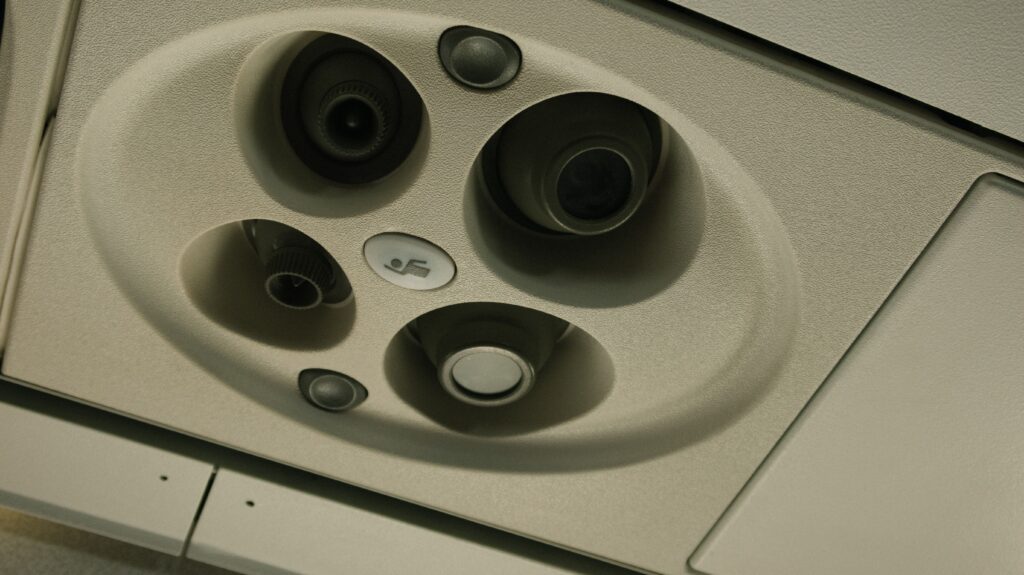
One of the main reasons that anxious flyers are afraid of dings is that they’re a sign that the seatbelt sign has been switched on.
Each airline, pilot and crew has their own approach. In most cases, if turbulence is expected, the seatbelt sign will become illuminated and you’ll be asked to return to your seat and fasten your seatbelt.
In some cases, the pilot may address the cabin and explain what’s happening. In other cases, you may not hear anything at all.
If the pilot is expecting immediate turbulence at high levels, they may make an announcement like: “Cabin crew, return to your seats”.
The decision to switch on the seatbelt sign – and the accompanying ding – are all done for your safety.
Why your brain interprets dings as dangers
Airplane dings are a normal part of flying, but when you’re anxious and in a heightened state of awareness they can be interpreted as dangers.
Pilots, cabin crew and even frequent flyers aren’t worried by these dings, because they know they’re normal. The key is to understand what the dings are.
When you do, they lose their power.
Practical ways to reduce anxiety when flying
Understanding what causes airplane noises (not just dings) can take away their power. We’ve created several guides about what causes airplane noises and why they aren’t dangerous. When you understand most dings are routine, they lose their power.
Turbulence signs can be random and unpredictable. This can take us by surprise, so it’s worth having a plan in place to deal with them.
Firstly, when the sign is illuminated, use a positive internal voice:
“If we experience turbulence, I’m completely safe.”
Diaphragmatic breathing can help to keep your stress in check. Breathe in for 4, hold for 4, and exhale for 8. Continue this for a couple of minutes to immediately reduce anxiety.
If you find you’re being pulled into a disaster move in your mind, use the 5-4-3-2-1 exercise to ground you.
You can find both exercises – and more – in our Calm Flight Toolkit and on our Help Desk.
Please share this article with anyone who might benefit from it.