In brief
- Flight simulators can provide a safe way to experience what it’s like to pilot a plane
- There are several types of flight simulator and packages available
- If you’re considering flight simulator for fear of flying, work with a trusted operator
Getting the pilot’s perspective
Flight simulators are an increasingly popular way for fearful flyers to understand the mechanisms of flight in a safe and controlled environment. Professional-quality airline training simulators are now widely available to the public. They provide a safe and controlled environment where nervous flyers can confront their fears, learn how aircraft work, and experience the sensations of flight.
Before we go on, it’s true that simulators don’t replicate the emotional stakes of real flight. They’re most effective for people whose fear is driven by uncertainty and sensations, not severe panic disorders. They can be used alongside other techniques, including CBT to help you develop the strength and resilience to fly with more confidence.
If you’ve not considered it before, here’s how flight simulators can help to reduce fear of flying, and what to expect if you book a session.

What are flight simulators?
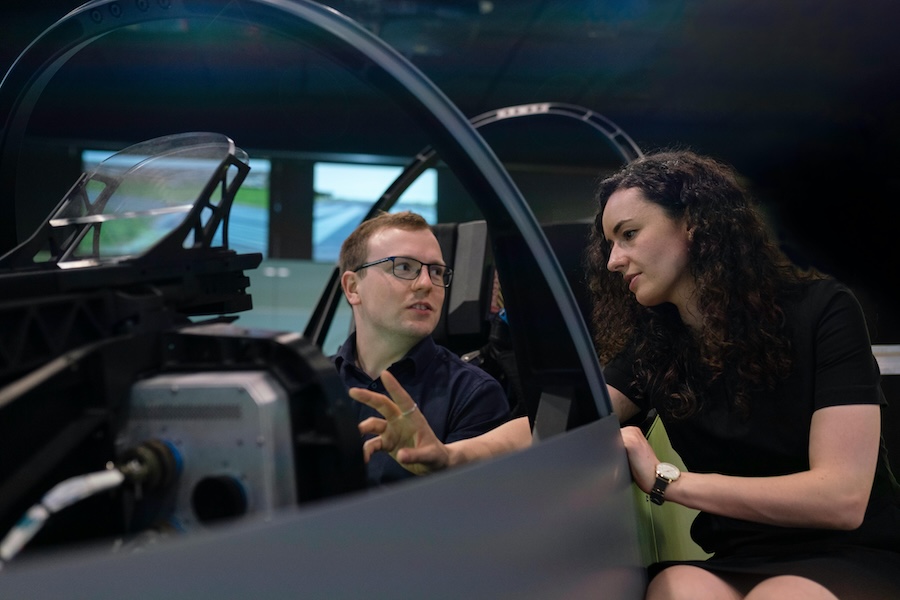
Flight simulators provide an ultra-realistic representation of flying. You get to sit in a cockpit, surrounded by real instruments. In front of you are several screens that provide a view of both the ground and the air.
Flight simulator sessions typically last 2-3 hours. During a specialised fear-of-flying session, you’ll be able to experience what flying is like from the flight deck. Some simulators feature a motion platform underneath that simulates the sensation of flight. This includes everything from takeoff and landing to turbulence.
Flight simulators used to only be available to professional pilots for training, but now, anyone can book a session. Prices vary across providers. You can book a single session or a series, depending on you and your requirements.
Types of flight simulators available
Full-motion airline simulators are the gold-standard and are used by airlines to train pilots. These multimillion-pound machines replicate every aspect of flight, including motion. While availability for the public is limited, some providers do offer “fear of flying” sessions in them.
Fixed-base simulators replicate cockpit environments with screens and sounds but don’t have the full motion to replicate turbulence and other sensations. They’re still highly immersive and are the most common type available to the public.
VR simulators use virtual reality headsets that simulate flights from a passenger’s perspective. While less realistic than full simulators, they’re more accessible and cheaper. They can be purchased and used at home for exposure practice and embedding learning.
Why flight simulators can work for fear of flying
Flight simulators aren’t real life, but they provide a real-enough experience that can have a measurable and lasting impact on your fear of flying.
Simulators can be part of the cognitive behavioural therapy (CBT) exposure model. By repeatedly facing triggers like engine noise and turbulence, people can challenge catastrophic thoughts, replacing them with rational and evidence-based beliefs.
Here’s why flight simulators can work for fearful flyers:
Exposure in a safe space
Flight simulators allow fearful flyers to experience many of the sights, sounds, and sensations of flying. Unlike fear-of-flying courses, they do this all without having to visit an airport or leave the ground.
This is why flight simulators are ideal for exposure therapy. People can confront their fears gradually and safely in a gentler way than a fear-of-flying course with a same-day flight.
Control and education
Unlike a real flight, people can control the experience. You can pause and repeat anything. You’re also able to ask questions at any stage.
During specialist fear-of-flying sessions, instructors (many of whom are professional pilots) can explain what’s happening. They can walk you through everything, from takeoff, turbulence, and landing.
Understanding the mechanics of flight can help some people reduce their anxiety.
Anxiety-reduction
Repeated simulator sessions help ‘desensitise’ fearful flyers. By experiencing stressful situations (like turbulence) over and over again, people can get used to it. This can help to reduce the brain’s “threat” response. In a real flight, the sensations of takeoff, landing and during turbulence aren’t new or strange, they’re familiar – making them easier to deal with.
What happens in a flight simulator session?
Each provider will differ, but most fear-of-flying simulator experiences follow a similar structure.
Step 1: Briefing
Participants meet the instructor, usually a current or former commercial pilot. They discuss the person’s specific fears, including turbulence, takeoff, and loss of control. Being honest at this stage enables the pilot to tailor the session, focusing on the biggest triggers.
Step 2: Familiarisation
The person sits in the simulator cockpit or cabin. They can explore controls, instruments, and systems. It can be enjoyable understanding what life is like as a pilot, but there’s a serious purpose as you can learn how planes are designed for safety and there are several redundancy systems in place.
Step 3: Simulated flight
Depending on your anxiety triggers, the simulator can be set up to reproduce key phases of flight. This can include taxiing, takeoff, cruising, turbulence, and landing.
During the simulated flight, the instructor will narrate what’s happening and why. They can explain noises, vibrations, and pilot procedures, giving you a valuable insight into their work and world.
Step 4: Practice and repetition
The best thing about a simulation is your ability to repeat aspects as much as you want. You can repeat challenging sections, like turbulence, until the anxiety decreases. This repetition can help to build tolerance and confidence.
Simulations give you control. If things are getting too much, you can always pause and refresh yourself.
Step 5: Debrief
Most simulator sessions end with a period of reflection. You can ask any questions or request strategies for applying the learning on a real flight. It’s about providing you with practical skills.
Practical tips if you’re considering a simulator
Simulators can be expensive. It’s important to shop around for one that you can trust. Here are some tips if you’re considering a fear-of-flying simulator session:
- Choose a reputable provider: Try to find a provider that employs qualified pilots or therapists. Always check out reviews and speak with others who have booked a session before (if possible).
- Prepare questions: Write down your worries about flying before you attend, so you can ask during the session. Sessions can trigger anxiety and having everything written down will ensure you get the best from every session.
- Practise grounding: Use breathing or mindfulness techniques during the simulator to build real-world skills. If you feel it’s getting too much, take control and pause the session.
- Repeat sessions: While it can be expensive, if you feel you need it, book another session. The more exposure, the more effective the desensitisation.
- Combine approaches: For maximum impact and chances of success, pair simulator use with therapy, educational resources, or airline fear courses.
If your fear of flying is acute, always speak to a specialist. Professional therapy (such as CBT) may be more affordable and effective for you than a simulator session.
Exposure to build confidence
Flight simulators provide a bridge between theory and reality for nervous flyers. You can experience aspects of flights, but stay in control and on the ground (something you can’t do with a fear of flying course, for example).
Flight simulators can help to transform the flying experience from overwhelming to manageable, with exposure building confidence and instilling calm.
If you’re worried about an upcoming flight, check out our Help Desk and download our free Calm Flight Toolkit.
Please share this article with anyone who might benefit from it.
FAQs
Flight simulators provide a safe and controlled environment where you can experience aspects of flight that trigger anxiety. Using the simulator is a form of exposure therapy, which can help your brain to learn that flying is safe.
Modern flight simulators provide an incredibly realistic replication of flight. While your brain still knows you’re on the ground, they’re incredibly immersive and authentic.
Flight simulators may not be able to cure your fear of flying, but evidence suggests they can increase confidence. Simulation and virtual reality therapy has been proven to help people increase confidence. If you’ve not flown for a long time and a simulation helps you get the confidence to board a plane, we’d consider that a success.
Take your time to find a simulation provider that also offers therapy support. Simulation should be part of a personalised package of support that’s designed around you and your fear of flying. Always check out reviews and testimonials and ask questions before you book.
