Turbulence is a key anxiety trigger for fearful flyers, but it’s part of the everyday routine of flying, says our highly experienced pilot. In the latest in our Expert Insights series, we spoke to an airline captain at Fly with Pip to get his perspective. (He wants to remain anonymous at this stage, but we can guarantee he’s a fully qualified airline pilot!).
Hi. As a pilot, can you explain why people shouldn’t be afraid of flying?
I would never tell someone their fear is silly. Fear of flying is one of the most common fears. Most of the time it is a strong body feeling with no clear name for it.
Here is what I can say, as a captain. Two fully qualified pilots sit up front. We train in the simulator on a regular cycle for the situations we might meet, like engine problems, go-arounds, weather diversions and more, until we both know exactly what to do. On the aeroplane, important systems are built with more than one way of doing the same job, so a single failure does not leave us without options. Before we leave we brief the weather and the route, and we work through the checklists together.
That knowledge does not switch fear off overnight. It does give the worry something solid to lean on.
Let’s go back to basics. What causes turbulence?
Turbulence is simply air that is not moving smoothly. The wing is always supported by that air. There are no “air pockets”.
We plan for it before we push back. In the air we use forecasts, ride reports from aircraft ahead, and weather radar. When a bumpier band shows up, we often coordinate with air traffic control to try a different level or a slight route change, looking for smoother air that other crews have already found.
Warm ground on a sunny afternoon stirs the low-level air, so climbs and descents later in the day can feel bumpier; morning flights are often smoother. Weather fronts and puffy cumulus can roughen the ride a little too. At cruising height the jet stream can add its own bumps.
None of that means something has gone wrong. We are flying through air that has texture.
Why does turbulence worry passengers, but doesn’t bother pilots?
Your inner ear notices small changes in motion very well. In a seat with no clear view of the horizon, the brain fills in what the eyes cannot see. A small bump can feel much larger than the aeroplane is actually moving.
From the flight deck we have instruments, a clear picture of the weather we briefed, and years of feeling the same bumps. We know the aeroplane is riding the air the way it was built to. Wings flexing a little is normal; they are meant to soak that up.
The seat-belt sign is usually a comfort precaution, so hot drinks stay put and people stay settled. Keep your belt fastened loosely whenever you are seated, even with the sign off. If a bump arrives without much warning, you stay where you are.
For us, turbulence is a comfort issue to manage.
Want to know more?
How to calm fear of flying – Q&A with a coach
Unexpected bumps can be scary to kids. How would you explain turbulence to a child?
I keep it short.
“The air is like a river. Sometimes it is smooth, and sometimes it has little ripples. Our plane rides on that air the way a boat rides on water. When we go through a ripple, the plane bumps. There are no holes in the sky. The air is always under the wings.”
If they can see the wing tip move a little, say that is fine. Wings are built to bend a bit, like a car’s suspension on a bumpy road.
Then I point to the seat-belt sign. “When that light comes on, we sit still with our belts done up. The pilots put it on when the ride might get bumpy. It is a normal light, not a scary one.”
How can parents best support a child who is afraid of flying?
Start with small steps, and stay calm yourself. Children read the adult next to them more than the safety card.
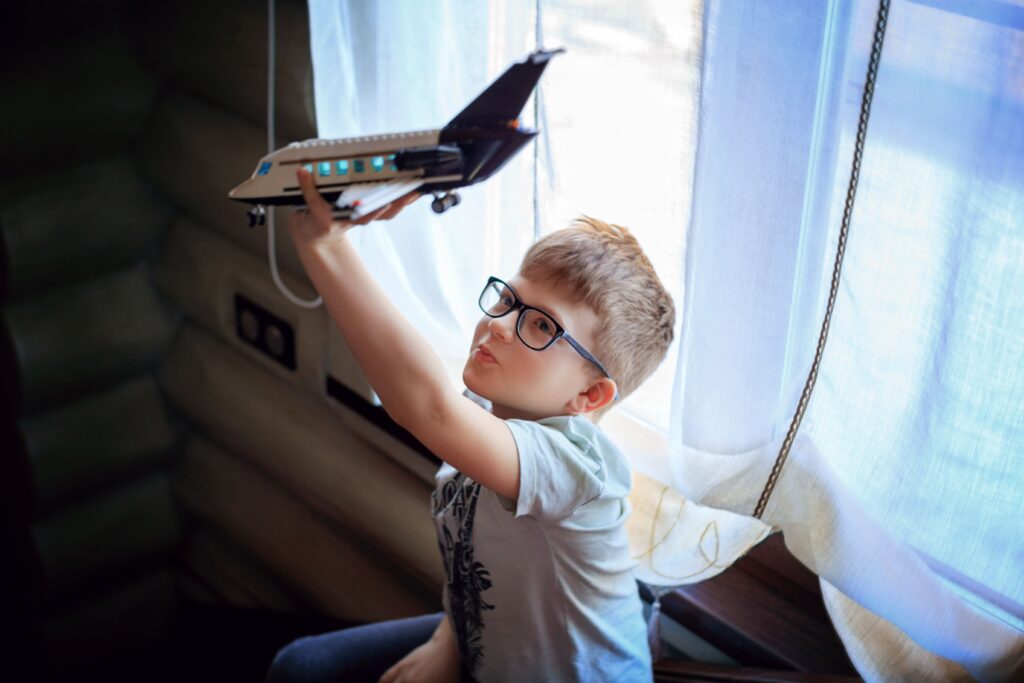
Before the trip, walk through the day in plain words. The more excited they are for each step, the better. A small toy aeroplane helps. So does a book about the real process of a flight, so they prepare ahead. That is why we made our Activity Book that way, so you can learn the answers yourself, ready when they ask.
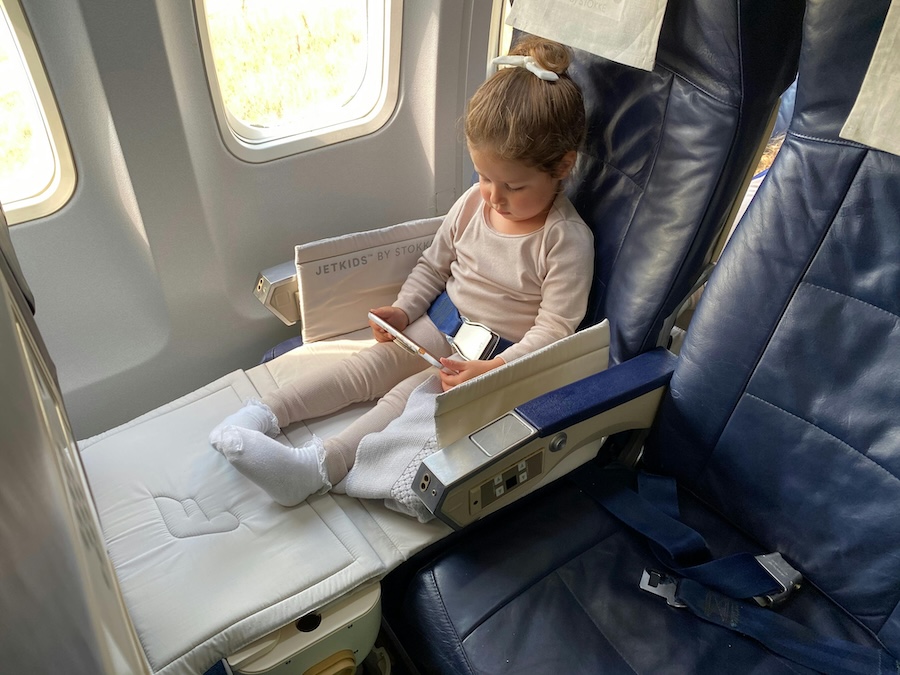
On board, keep answers short. Quieter engines after take-off are planned. The soft ding is often the seat-belt sign. Keep the belt done up loosely when they sit. Save colouring for the cruise, once the sign is off. In taxi, take-off and landing, a calm chat is enough.
If the fear is severe, talk to your GP. That is a medical decision, not a parenting failure.
Lastly, can children overcome a fear of flying?
Often, yes. Fear of flying is common. It can ease.
What usually helps is gradual exposure rather than avoidance. Avoiding flying tends to keep the fear going. Try a gentle ladder: watch a take-off video together, visit an airport, sit in a parked aeroplane on an open day if you can, then a short flight, then a longer one. Move up a step when the current one feels manageable.
Once the bumps and the noises have plain names, they stop being mysteries. Slow breathing with a longer out-breath can calm the body in the seat.
Every child is different. Some settle after one well-explained trip. Some need more time. Some need a GP’s advice. There is no single clock. Progress counts, even when it is slow.
Please share this with anyone else who might benefit from it.