In brief
- Planes are safe environments, with infection risk low because advanced filtration systems that remove potentially harmful viruses
- Instead of focusing on practical risks, understanding the real risks can reduce anxiety
- Understanding the causes of flight anxiety can help you overcome it
Are you anxious about infections on planes?
Why are some people worried about flying again? It’s often related to the ‘C’ word. During the COVID-19 pandemic, millions of people stopped flying altogether. The global pandemic was an awful time for many of us, especially those who experience anxiety.
Even after COVID-19 is consigned to the past, some travellers are now only just considering their first trip in years.
Of course, there are other reasons you may not have flown in a while. Others may be returning after time away due to health concerns, financial reasons, or lifestyle changes. You may just want a holiday!
If you’re worried about infection risks on planes this article provides information and evidence that can help you make an informed decision to fly.
Why am I worried about COVID-19 infection?
The COVID-19 pandemic was a once-in-a-generation event that has had a huge impact on all our lives. While COVID-19 is no longer the risk it was, many people are still anxious about their risk of becoming infected with it (and other airborne conditions).
The pandemic had a huge impact on mental health, with the World Health Organization (WHO) recording a “massive” 25% increase in anxiety and depression worldwide in 2022.
Scientists and studies have found evidence for post-pandemic anxiety, described as post-COVID-19 anxiety. Between 16-29% of patients reported feeling anxious after being infected.
In the immediate aftermath of the pandemic, there were studies that suggested air travel would reduce. The evidence shows that after a dip during the pandemic, flight numbers (the number of flights taking off and the numbers of passengers travelling) continue to rise.
Why am I anxious about flying?
The fear of flying is complex and can have many causes. It could be a perceived lack of control, anxiety caused by a previously stressful flight, claustrophobia or a combination of these factors.
Many fearful flyers also suffer from anxiety in other aspects of their lives. One common form is health anxiety (or illness anxiety).
The NHS describes this as a situation when you spend so much time worrying about your health it takes over your life and influences your decisions. (they also discuss the links between health anxiety and obsessive compulsive disorder.)
It’s conceivable that some people with fear of flying may actually have a fear of becoming infected while flying.
We’re not medical experts and if you’re worried about the causes of anxiety, it’s something you can explore with a professional therapist.
Unpacking infection risks on planes
Air travel was closely linked in public perception to the spread of COVID-19.
The reality is that the close proximity to other passengers carries risk of viral transmission. The closed conditions of air travel do increase the risk of infection, says the US Centers for Disease Control and Prevention (CDC).
In its Yellow Book, the CDC explains that communicable diseases like influenza virus and respiratory syncytial virus can be caught on planes. (It also warns that pathogens including SARS-CoV-2, measles virus, and Mycobacterium tuberculosis can be transmitted in planes.)
It sounds dramatic, but there’s a risk that you can come into contact with – and be infected by – these infections anywhere you come into contact with people.
A 2018 study published in PNAS, tracked the movements of 1,540 passengers and 41 cabin crew on transatlantic flights.
Scientists found that passengers in close proximity to an infected person were four times more likely to be infected than other passengers (whose risk of infection was just 3%).
In the paper titled Airborne infection risk of nearby passengers in a cabin environment and implications for infection control, researchers created a model aircraft cabin to simulate the travel environment. Neighbouring passengers were the most affected, with backrests protecting those in front.
While aircraft cabins are safe environments, observing standard precautions like keeping your hands clean can massively reduce your likelihood of developing an infection, says the World Health Organization.
Planes have highly effective air filtration systems
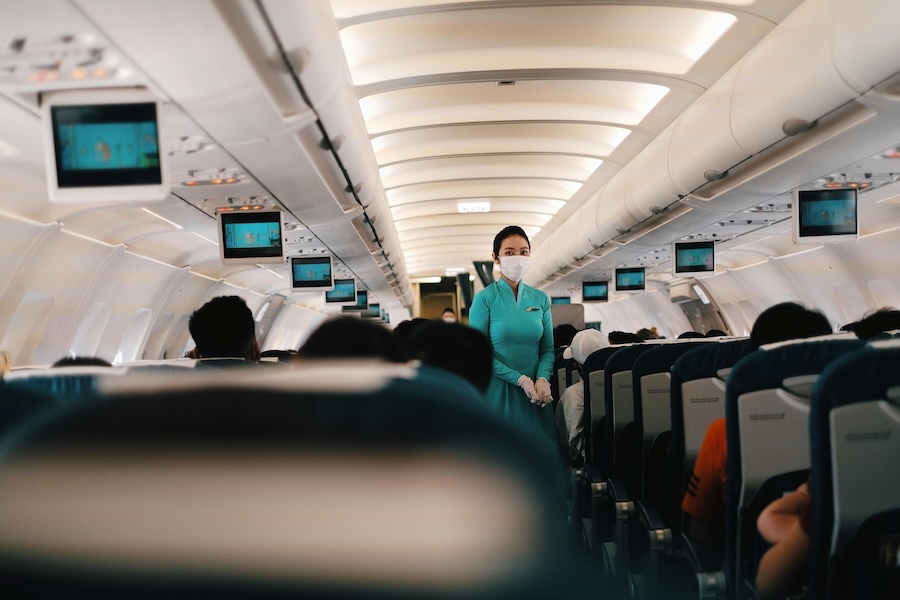
The ventilation systems on modern aircraft are highly effective, and use healthcare-standard HEPA filters that capture 99.97% of airborne particles. Large commercial jet aircraft recirculate 35–55% of the air in the cabin, mixed with outside air.
The CDC states that “the cabin air environment is less conducive to the spread of most infectious diseases than typical environmental systems in buildings”. In simple terms, plane cabins may be safer than the outside world.
The European Centre for Disease Prevention and Control found that “transmission dynamics are basically the same, and infection levels aboard aircraft are generally no higher than on the ground”.
If you want to, you can read the 59-page Risk assessment guidelines for infectious diseases transmitted on aircraft.
It does caution that there’s still a risk of infection when the ventilation system is off and within the airport and during travel transfers.
Should I fly if I’m worried about my health?
We’re not medical experts and can’t answer this question. The evidence available to us suggests that the infection risk on planes is relatively low, but it’s not zero.
People who are worried about their health or who are immunocompromised shouldn’t rely on information and advice from the internet.
Instead, speak to a medical professional. They can provide informed and expert advice that’s personalised to you and any health conditions you may have.

Should I fly if I have a cold?
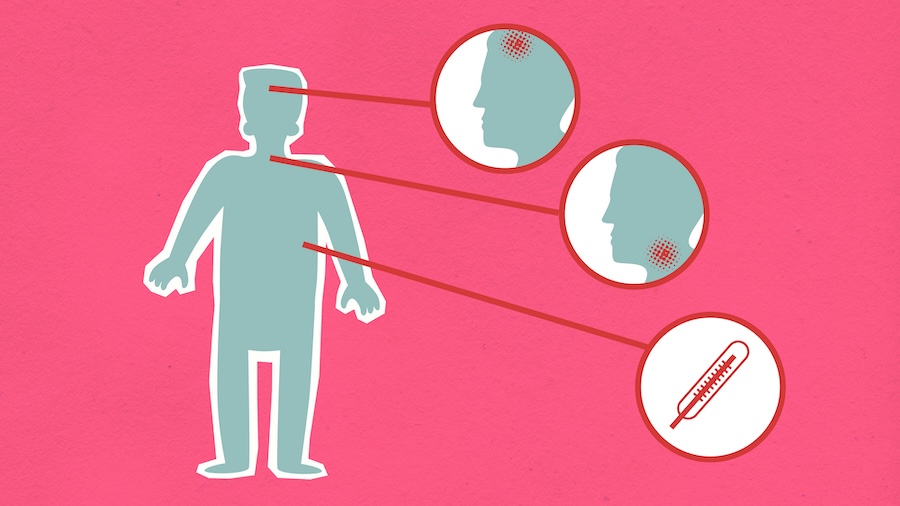
We’re not medical experts, but the view from Dr Sarah Jarvis, MBE, General Practitioner is that it’s safe to fly with a mild cold, but if your symptoms are more severe, it’s worth getting a professional opinion from a qualified doctor.
Her advice (reproduced from this great blog) is that you should not fly if you have:
- A fever of 38°C or higher and a severe cough
- Difficulty breathing or
- Chest pain or
- If you can’t control your symptoms with over-the-counter medication from a pharmacist (decongestants, simple painkillers, etc)
If you’ve got a cold, Dr Jarvis cautions that your infection risk is much higher. She recommends you take precautions to reduce the risk of infecting other people. This is especially important given the evidence that close passengers are at higher risk of infection.
You can’t prevent all risks
The coronavirus pandemic had a temporary impact on all our lives and for some of us, that anxiety persists.
We hope that understanding the evidence and infection risks can help you to make a clear and balanced decision about whether to travel or not.
For more information on fear of flying and its causes, check out our guides. If you need some additional reassurance or practical tools, visit the Help Desk and download the Calm Flight Toolkit.
Please share this article with anoyone who might benefit from it.
FAQs
If you’re sitting next to someone with a communicable disease then you may become infected. Passengers head or behind are much less likely to become infected, studies have found. There’s always a risk you can catch an infection from another person, but that’s as true on the ground as it is in the air.
Planes use a mixture of filtered air and air from the outside of the plane. Air is passed through highly efficient HEPA filters that can remove up to 99.97% of pathogens. While it’s not risk free, the infection risk on planes is low.
Flying with a mild cold shouldn’t be too much of a problem, but it’s important to get the advice of a medical professional if you’re worried about your health. If you’re flying with a cold, be conscious about other passengers and ensure you take extra precautions, like carrying and using hand sanitiser and reducing the risk of infection as much as you can.