In brief
- EasyJet is a safe, reliable and trustworthy airline and there’s no need to be anxious if you fly!
- EasyJet is one of Europe’s most popular carriers, transporting over 100 million passengers each year!
- I flew with EasyJet during a severe thunderstorms across Germany and my flight was calm, peaceful and professional – exactly as you’d expect from one of Europe’s most popular low-cost carriers
Why does flying on EasyJet make some people nervous?
EasyJet is a low-cost carrier, which can cause anxiety in some passengers. It’s often a misconception that the low flight prices and no-frills service mean lower safety standards – but that’s absolutely not the case (as we’ll explore below).
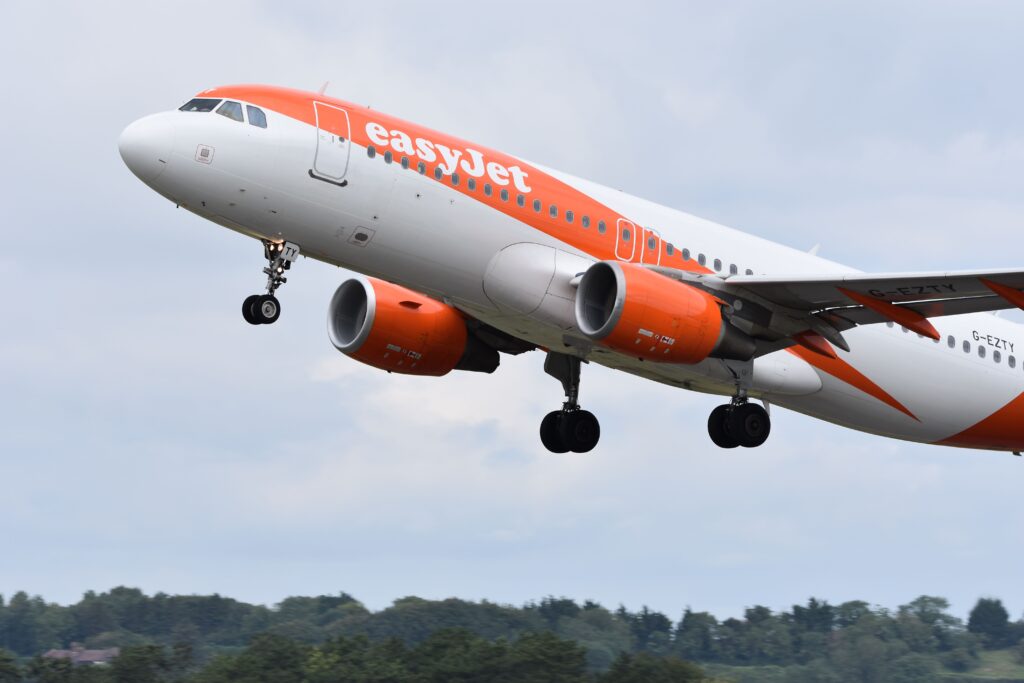
EasyJet is one of Europe’s busiest and most popular airlines. Its fleet of more than 340 aircraft serves over 1,000 routes. In 2024, over 100 million passengers flew with EasyJet – with every one taking off and landing safely!
EasyJet planes visit over 160 airports across 35 countries, with the carrier having an 80% occupancy rate. Many of its routes are completely sold out. That means busy planes, but budget-busting low prices.
I flew with EasyJet during some challenging weather conditions (something I’ve written about previously) and wanted to share my experiences – and essential facts and figures.
If you’re nervous about flying EasyJet, I’ll explain why there’s no reason to be worried about flying with the low-cost carrier.
(My most recent flight on EasyJet was EZY2930 from Munich to Bristol on 31 July 2026. When I checked in I was given a physically printed boarding pass!)
Is EasyJet safe?
Yes! EasyJet is a low-cost carrier with a fantastic safety record.
In fact, it’s recognised as the second safest low-cost airline in the world.
EasyJet is rated 7/7 for safety by AirlineRatings. They assess the safety of airlines using a huge range of factors including audits, safety history and operational standards.
You’ll also find that EasyJet is registered with the IATA Operational Safety Audit (IOSA) programme. It’s a globally recognised aviation safety auditing system that ensures members achieve the highest standards.
EasyJet adheres to all regulations, which means you can have complete confidence when you step on board an EasyJet plane. But we now that safe doesn’t always mean comfortable…
Why can budget flights feel more frightening?
EasyJet is a safe airline, but that doesn’t stop some people being anxious about flying. Why? There are several reasons – including a false association between cost and quality,
The “budget airline” label can trigger anxiety
Some people make a false association between a budget airline and safety. As we’ve explained above, EasyJet has a fantastic safety record, with thousands of trouble-free flights.
EasyJet’s modern fleet of aircraft are maintained to the highest standards, which means you can have confidence in their safety.
Airbus operates Airbus A319, Airbus A320, A320neo, Airbus A321neo aircraft. The planes have flown millions of miles with very few recorded incidents.
Lots of passengers in a small space
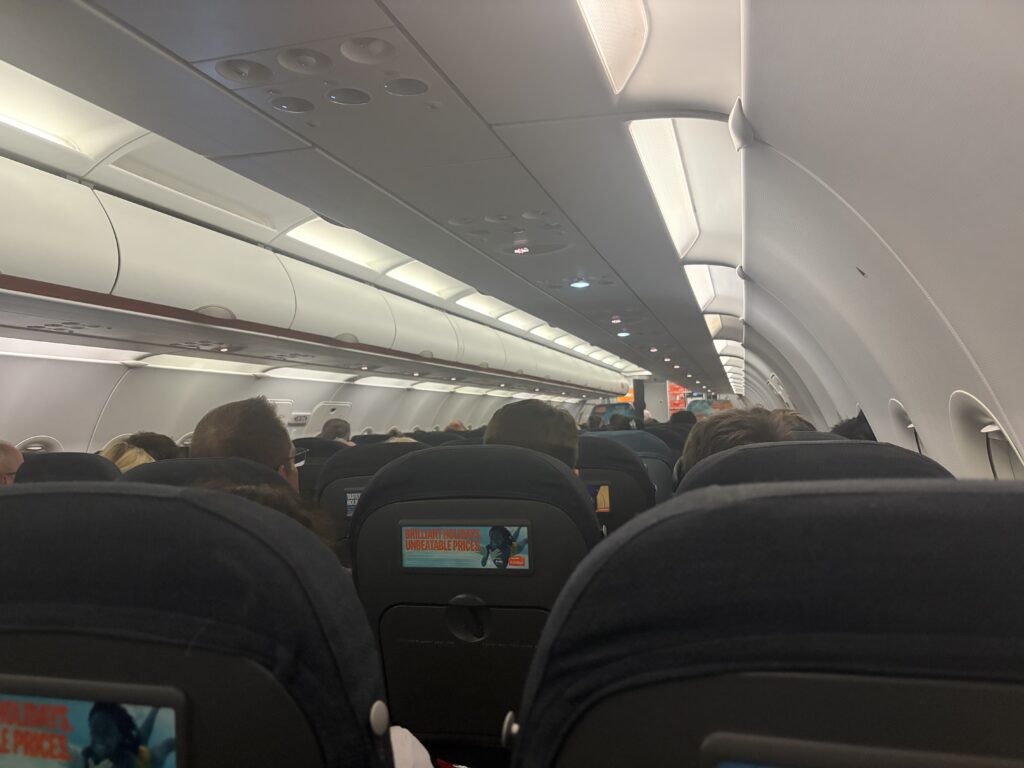
Like other budget airlines, EasyJet packs in passengers with high density in its cabins. Planes have a standard 3-3 layout. That’s 3 seats either side with a single aisle in the middle.
Here’s how the passenger numbers stack up:
- Airbus A319: 156 seats
- Airbus A320 / A320neo: 186 seats
- Airbus A321neo: 235 seats
EasyJet predominantly operates over short distances, which means the small space is tolerated rather than enjoyed.
On my most recent flight, the seat conditions were fine and comfortable. I’m 185cm tall, which can cause problems in some spaces, but EasyJet was fine. (You can see an image below.)
Flying with an unfamiliar airline can feel riskier
When it launched, EasyJet was a challenger airline that used aggressive pricing tactics to grab a share of the market.
Today, EasyJet is an established and highly successful airline, transporting over 100 million passengers every year.
Today, EasyJet is every bit as respected as marquee carriers. In fact, EasyJet has been voted the UK’s best low-cost carrier at the 2025 Skytrax World Airline Awards.
No-frills customer experience
Low-cost carriers work on tight margins. The personal service you’d get on a premium airline comes at a price. If you’re travelling with EasyJet, you’ll need to be prepared to make compromises.
You’ll need to check in your own bags and may face a wait at busy terminals. We had to wait over an hour to check-in our bags at Munich (but airports like Bristol have automated check-in which can make things a lot easier.)
When you’re in the air, the customer experience is positive with the crew friendly and professional – especially with children and anxious passengers.
Don’t low-cost airlines use cheaper pilots?
No, EasyJet pilots are as skilled, qualified and safe as those flying with any other airline.
EasyJet pilots go through a rigorous and structured training programme – known as the Generation EasyJet Pilot Training Programme delivered in partnership with CAE.
When they qualify, pilots have achieved the same standards as any of those working for other commercial carriers.
When they’re qualified, pilots will work a maximum of 100 block hours per month. Over a year, pilots will work 900 hours. This is all dictated by EASA regulations and ensures pilots are rested, focused and operating at the highest levels.
Turbulence on EasyJet flights: Should you be worried?
Turbulence on EasyJet flights is likely to be no better or worse than any other carrier. The planes are the same and the flying conditions, too.
Evidence shows that the intensity of turbulence can feel heavily influenced by the mind – especially among those with a fear of flying.
During the flight experience, anxiety can amplify physical sensations, making normal, minor air bumps feel like big drops.
EasyJet planes – like any others – experience turbulence. But it’s no better or worse than other carriers flying in the same conditions.
My flight with EasyJet: What to expect step by step
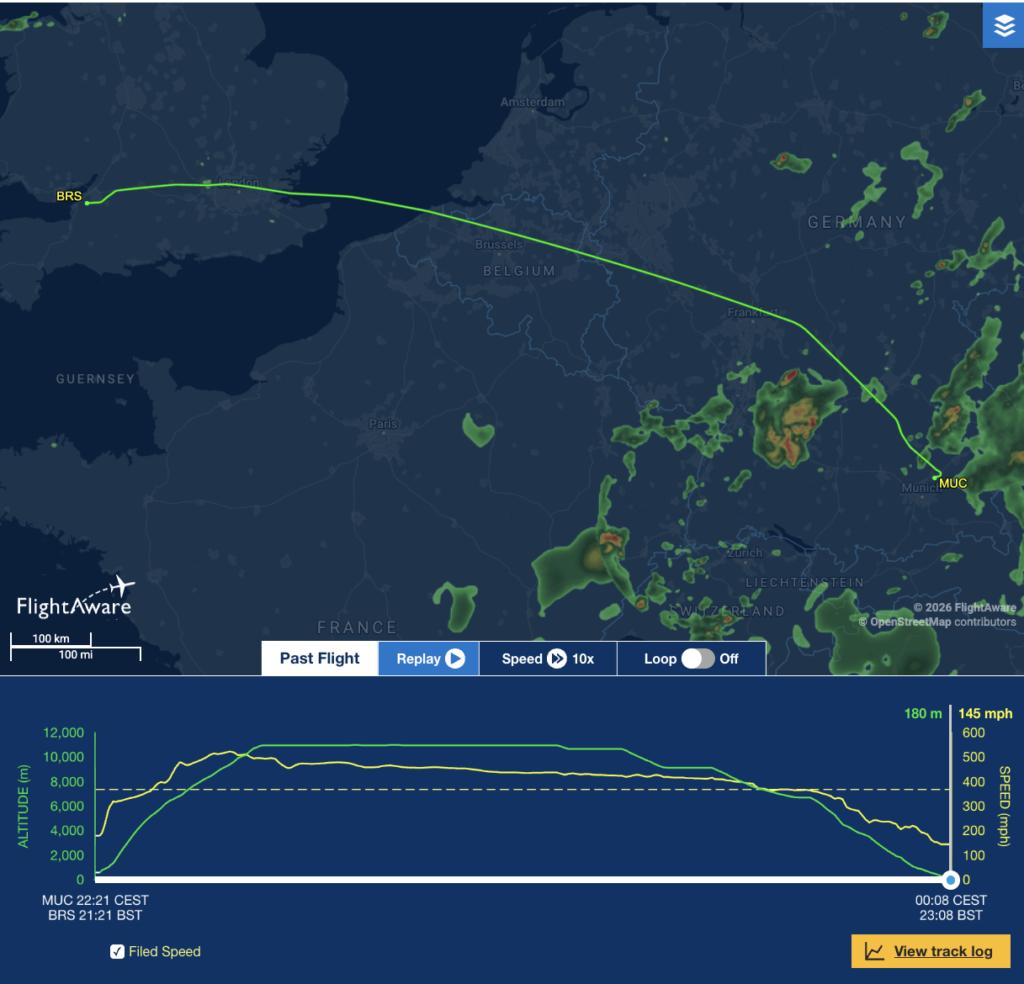
EasyJet was EZY2930 from Munich to Bristol on 31 July 2026. My family and I were returning from a family holiday. The flying conditions were less than perfect, something I’ve written about in depth here.
You can see the plane’s flight route here:
At the airport
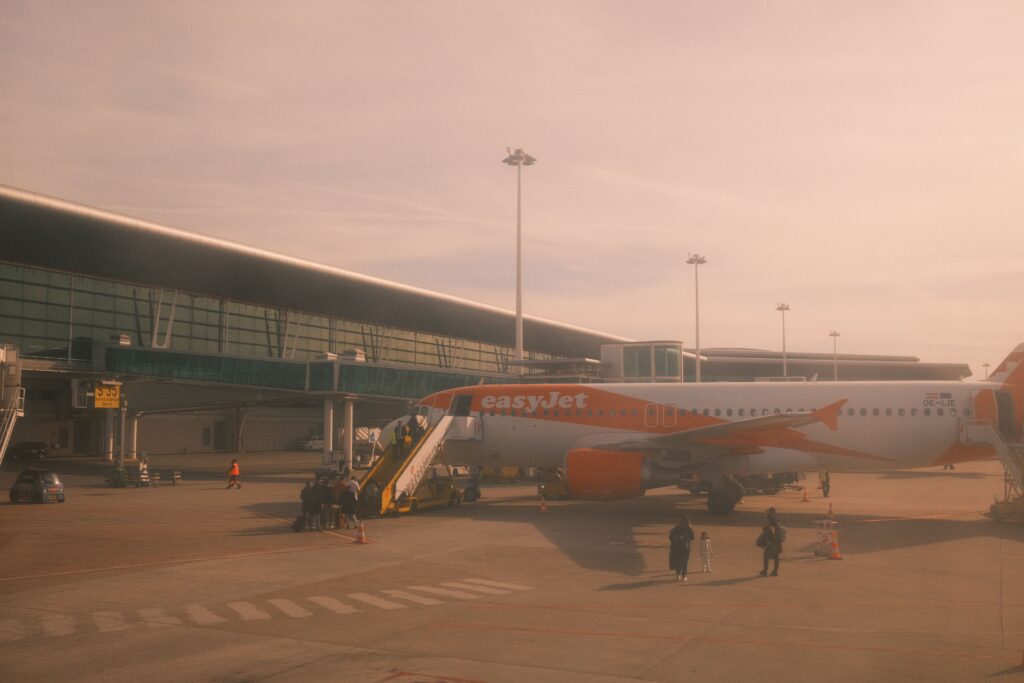
EasyJet operates from many of Europe’s largest airports. Its bold orange branding makes it easy to spot in most airports, however we struggled to identify this in a large and very busy Munich Airport.
Next time we fly from an unfamiliar airport, we’ll do our research.
Check-in is standard and it’s reassuring to be able to chat with real people.
Everything is managed in the EasyJet app which is simple and seamless to use. On this flight, we were given a physical boarding pass – which was quite retro and cool.
EasyJet enables you to book additional bags, something we had to do as our luggage was lost on the out-bound journey (more about this in another post).
Boarding the aircraft
EasyJet operates its boarding in a similar way to other low-cost carriers like Ryanair with priority passengers asked to board first, followed by families and then everyone else.
EasyJet operates a fast turnaround with flights boarded and taking off in less than an hour. We were boarded and in the air in 27 minutes, although this was in part due to a closing weather window.
The cabin is clean and modern, with everything clean and well maintained. They’re a step up from the older and slightly tired Boeing aircraft we flew on with Ryanair.
Take-off and the first few minutes
EasyJet operates a fleet of modern Airbus aircraft and the takeoff was smooth. As I’ve written about here, the takeoff was turbulent due to unsettled weather conditions.
This was all made clear to us as we boarded the aircraft, which helped to settle any anxiety passengers had.
The view from the windows is great. My favourite seat (19F) provides a great view from just behind the wing. I was able to look out of the window as we took off and even saw a crack of lightening, as we navigated around storms.
Cruising and dealing with sensations in the air
Every flight is unique, with many experiencing little or no turbulence. My flight wasn’t as lucky, but the aircraft and crew handled the light to light-moderate turbulence with ease.
We established cruise quickly and the seatbelt light was switched off after 30 minutes.
I could see a crew member speaking to an anxious passenger, providing a friendly face to build reassurance.
Landing and leaving the aircraft
Landing was forecast to be choppy, but we experiencing nothing aside from the normal bumps you get approaching an airport.
Touching down was smoother than the “positive” landing you often experience with Ryanair. The crew waved everyone off with a smile.
Ours was the last flight of the day and the pilot had to leave the aircraft in a safe space. This meant a significant walk through the Bristol terminal, but that’s not EasyJet’s fault.
Baggage claim was rapid, in part because the airport wasn’t busy at midnight.
We left the plane, passed through passport checks, and claimed our luggage within half an hour.
Overall experience
EasyJet’s crew and pilots were hugely professional. The negatives we experienced – including boarding delays, turbulence, and a half an hour walk through the terminal at Bristol – weren’t the fault of EasyJet.
The flight experience is notable for just how relaxed it was.
Would I fly EasyJet again? Absolutely – and you should, too.
How to feel more comfortable flying with EasyJet
If you choose to fly with EasyJet, here are some tips to help you make the best of the experience.
Download the app!
The EasyJet app is essential for checking-in, boarding and flying. While EasyJet hasn’t gone completely digital yet, it’s only a matter of time.
Inside the app you can find your boarding passes and details of all restrictions on luggage. We needed to book an additional bag and this took a few minutes to achieve. (Even better, EasyJet offers a lower rate on a 15kg hold bag – something many other carriers don’t.)
You can share the booking with others too. You just need the booking reference and surname of the lead passenger.
Preparing before your flight
Preparing for a flight is all about reducing anxiety. We should have investigated details of EasyJet’s presence at the terminal, but we didn’t.
Priority Boarding is one of those things that makes sense if you’re anxious, because you get the opportunity to navigate a near empty cabin rather than having to move past hundreds of other passengers.
EasyJet’s carry-on bag size is enough for you to pack everything you need. The flights are likely to be short (four hours or less) so you don’t need a huge amount of entertainment to keep you occupied.
Booking a seat is a must for anxious flyers. My preference is for 18F or 19F, but that’s because I enjoy the view, not because of any superstition. (Every seat is safe!)
Managing anxiety during the flight
If anxiety is part of the flying experience for you, it’s important to plan for it – and ensure you have tools to help.
Distraction is a great strategy, especially on shorter flights.
Breathing exercises, grounding techniques and mindfulness can all help to bring you back to the present moment and avoid anxiety spiralling.
You can find guides on reducing flying anxiety in the Help Desk.
If you’re flying soon, download the Calm Flight Toolkit which is packed full of evidence-based advice, tools and techniques that can help you.
EasyJet flights don’t have to feel scary
EasyJet is a safe, modern and professional airline and there’s no need for flights to feel scary. The low-cost carrier has proven it operates at the highest safety standards. Its modern fleet of aircraft are well maintained and its pilots highly trained.
You can travel on EasyJet with complete confidence. Look at the cheap price as a huge benefit. While the experience may be less personal than a premium carrier, that’s reflected in the price.
Anxiety around EasyJet is most likely to be a manifestation of a general fear of flying. If that’s the case, we’ve got you covered.
If you’re worried about flying, check out our Fear of Flying pages where you can learn about the mechanisms of flight, turbulence and airline safety.
The Help Desk contains practical guides and professional support, with therapists, counsellors and other experts sharing their insights with you.
Wherever you’re travelling too, enjoy your EasyJet flight!
Please share this with anyone who might benefit from it.
FAQs
Yes, EasyJet is recognised as one of the safest airlines globally. It holds a 7/7 safety rating from AirlineRatings and is registered with the IATA Operational Safety Audit (IOSA) programme, which ensures the airline adheres to the highest international safety standards.
It’s a common misconception that low prices mean lower safety standards. EasyJet operates a modern fleet that is maintained to rigorous standards, and its pilots undergo extensive training identical to those at premium carriers. The reality is that anxiety around budget carriers often stems from a general fear of flying rather than the airline itself.
Turbulence is a normal part of flying and is not a sign of danger. Whether you are on a low-cost carrier or a premium airline, the experience of turbulence is the same. It is an inconvenience rather than a threat to the safety of the aircraft.
Preparation is the best way to manage anxiety. Downloading the EasyJet app, booking your seat in advance, and using relaxation tools like box breathing or the Calm Flight Toolkit can make a significant difference. Familiarising yourself with how planes work through dedicated fear of flying resources can also help you feel more in control.