In brief:
- Fly Above Fear is the world’s leading free fear of flying resource
- Everything you find on Fly Above Fear is completely free – and will remain that way
- Fly Above Fear was created by Lawrie Jones, a journalist who’s spent 20 years writing about aviation, engineering and healthcare
- We want everyone to experience flight and the joy of international travel!
Get free help for fear of flying
Fly Above Fear is a completely free resource to help people manage and reduce their fear of flying. We’ve spent thousands of hours learning about the causes of fear of flying, turbulence anxiety, and anxiety triggers. This has helped us create a huge range of articles, guides and how-to posts to help you cope with a fear of flying.
Why should you trust Fly Above Fear? The site was created by Lawrie Jones, a journalist who’s spent 20 years writing about aviation, engineering and healthcare. I’ve also spent time in counselling training to get a greater understanding of the causes of anxiety.
If you’re looking for free help for fear of flying, we can help you. All the resources here are completely free to access – and will remain that way. At Fly Above Fear, there are no subscriptions, paywalls or protections – just free-to-access content on fear of flying.
What’s included here?
This blog provides a curated list of free fear of flying resources that you can use. We provide information that you might need at each stage of the flight experience – from booking, packing and preparation to getting on the plane.
All of the resources here can be accessed by clicking. No paywalls or protection, just evidence-based information to help you.
Flying today? Start here
The day of the flight is an anxious time for nervous flyers. If you’re flying today, you’ll want to resist checking the weather and imagining unlikely scenarios and access resources that can restore calm and increase confidence.
The purpose of pre-flight preparation is to put you in the best physical and emotional condition to fly. When you step onto the plane you’re as calm and relaxed as you can be and ready to experience the flight as it it, not how you imagine it could be.
Instead of doomscrolling, endless checking turbulence forecasts, or spiralling into anticipatory anxiety, try reading these 5 pages before you fly.
- Pre-flight checklist for anxious flyers: Check out our step-by-step preparation guide to help you get organised and reduce anxiety before you head to the airport.
- What to pack to reduce in-flight anxiety: This is a clear and curated list of comfort items that can help you feel more grounded and secure while in the air, informed by our experiences.
- How to tell the cabin crew you’re a nervous flyer: Practical advice on how to communicate your anxiety so the crew can support you during your flight.
- How to cope at the gate and during boarding: Evidence-based strategies to help you to manage stress during the potential high-anxiety moments before takeoff.
- Panic attacks on planes: what to do if it happens mid-flight: An in-depth and honest guide on how to manage a panic attack safely if you experience one mid-flight.
Preparation for a flight is vital and is something that every anxious flyer should do. If you know that anxiety is part of the flight experience for you, it’s important to develop some ways to reduce it.
Breathing, grounding and mindfulness techniques can all have a positive impact on your physical and mental wellbeing and can be used discretely in the airport and on the plane.
Resources to restore in-flight calm
Anxiety can lead to panic on a plane, but it can be controlled. Evidence suggests that controlling your breathing and using grounding techniques can help anxious flyers to lower anxiety levels.
These techniques can all be used before you get on the plane to help reduce any anticipatory anxiety. They’re easy to do and can be done secretly, without drawing attention to yourself.
Here are 5 ways that you can learn to manage the physical and psychological symptoms of fear of flying.
- Breathing techniques for in-flight anxiety: Learn simple and specific breathing patterns designed to lower your heart rate and signal safety to your nervous system during flight.
- Grounding techniques you can use in the airport and on the plane: Easy exercises to help you stay present and connected to your surroundings when anxiety starts to feel overwhelming.
- Mindfulness techniques for fear of flying: Instructions to help you observe anxious thoughts without getting swept away by them.
- Body scanning exercises for fear of flying: Expert tools to connect you to your body body during different stages of flight.
- Calm anxiety without drawing attention to yourself: Effective strategies to help you manage symptoms of anxiety privately and discretely in the cabin.
Not all of these exercises may work for you – and that’s OK. By practising them before you fly, you’ll know what works for you and what doesn’t. Sometimes, knowing that you can control anxiety is powerful, restoring control that we can sometimes feel has left us.
Perhaps nowhere is this lack of control felt more acutely than during turbulence. We can sometimes imagine ourselves being bumped around in the sky, but such scenarios are actually very rare, and even if they do happen, aircraft design and pilot skill mean we’ll be fine.
Let’s look at what turbulence is and learn what it may feel uncomfortable, but isn’t unsafe.
Understanding turbulence
Turbulence is often the primary trigger for nervous flyers, but the reality is that it’s fundamentally an aerodynamic constant rather than a structural threat. Or, to put it simply, it’s the weather being the weather and planes are designed to deal with it.
When you understand the science of airflow and how modern aircraft are engineered to cope with turbulence, you can hopefully stop perceiving turbulence bumps as dangerous and instead see them as a normal part of flight. (This is what pilots do!)
Reframing your perception from fear to familiarity is the first step towards feeling calmer as you fly.
Here are 5 essential resources to help you reframe how you experience turbulence:
Here are 5 turbulence articles that will educate you and hopefully reassure you.
- Turbulence explained: why it’s safe: An overview of how aircraft are engineered to handle rough air and why turbulence poses no structural threat to the plane or the passengers.
- Fear of turbulence: facts vs myths: Tackling common turbulence myths with aviation facts, evidence and insights.
- Turbulence levels explained: A guide to how pilots and meteorologists categorise different intensities of air movement using the Eddy Dissipation Rate (EDR).
- What causes turbulence?: Understanding the weather patterns, jet streams, and geographical factors that create bumps in the air – and why none of these should worry you.
- Can turbulence crash a plane?: Tackling one of the biggest triggers for nervous flyers, answering the question directly. (TLDR: turbulence is highly unlikely to crash a modern commercial airliner.)
Turbulence is a huge trigger for anxiety, but by understanding what it is, what causes it and how pilots deal with it you can reduce this fear. Flying, too, can help you learn that while turbulence can occur, it’s rarely as bad as we imagine it could be.
Instead of turbulence becoming unpredictable and uncontrollable (something that can cause anxiety) it can, over time, become normal. You may notice it, but your anxiety isn’t triggered by it.
This same approach can work for other in-flight triggers and flight fears many nervous flyers have.
The science of flight
Do you know how planes takeoff, fly and stay in the sky? Flying may feel magical sometimes, but there’s some serious science that keeps planes flying – and maintains the incredible safety record commercial aviation has.
Some anxious flyers worry that the plane may drop out of the sky in turbulence, fall to the ground if an engine stops, or that it may tip over as it banks. None of these things is true, and we can show you why.
Here are 5 articles exploring the science of flight, how planes glide and what happens if an engine stops:
- The science of flight: An accessible explanation of how planes fly, including lift, weight, thrust, and drag, the four forces that keep every aircraft airborne.
- How planes glide: Basic – but powerful – explainer on how planes are designed to stay in the air even without engine power.
- Why planes bank and turn after take-off: Explaining the normal maneuvers used by pilots to follow departure paths and clear noise-sensitive areas, and why steep banked turns are completely safe.
- What happens if a plane engine stops?: Details on engine redundancy and the safety protocols pilots follow in the highly unlikely event of power loss.
- What happens if a plane loses cabin pressure?: Tackling a common fear, this guide covers the oxygen systems and the rapid descent procedures pilots use to protect everyone on board.
The science of flight is complex and you may not want to know everything here.
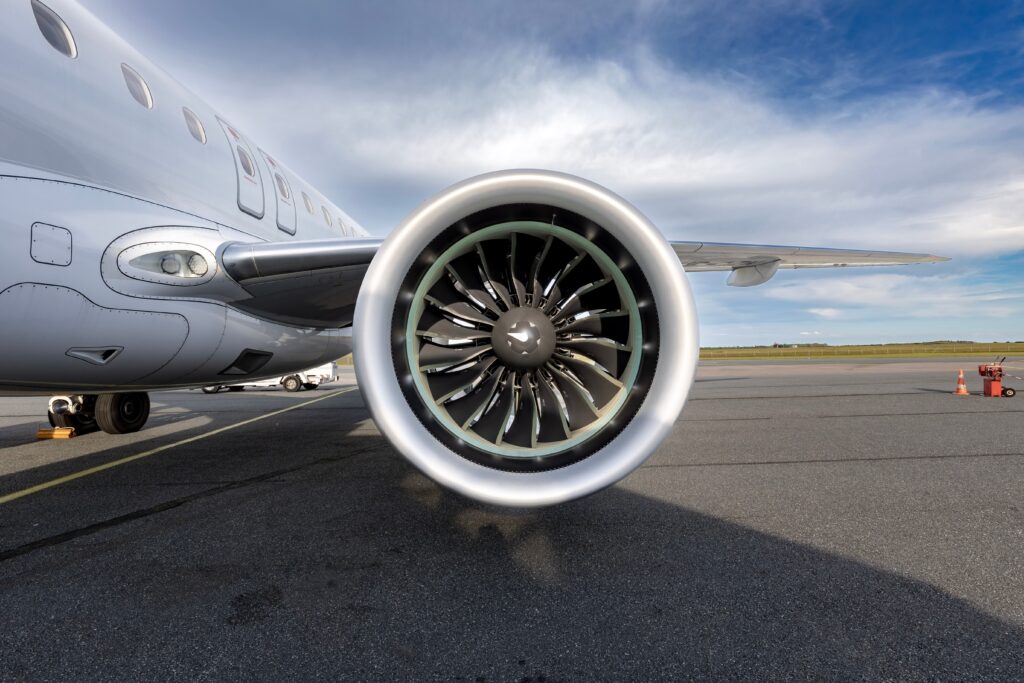
What happens during a flight
Unless you’re a frequent flier, the sounds and sensations of flight can trigger anxiety. Unfamiliar noises can trigger anxiety because your body interprets them as things going wrong, when in the overwhelming majority of cases, there’s a simple and mundane explanation for what’s happening.
When you know what’s causing a sound like the landing gear retracting, or a sensation like the slight “drop” after takeoff (which isn’t really a drop at all), you’ll feel more confident.
The stages of flight are carefully choreographed and most flights follow precisely the same pattern. This is great, because once you understand what the pattern is you can prepare for it – reducing its power.
Here are four articles to help explain in simple and clear terms everything that you’re likely to experience during a routine commercial flight.
- A step-by-step guide to plane takeoff: Here’s what you will feel and hear from the moment the aircraft start to taxi until you reach cruising altitude.
- A step-by-step guide to plane landing: Understanding the deceleration, flaps, and gear deployment that occur during the final phase of flight – and how they combine to help you land safely.
- Airplane noises explained: Explaining the common mechanical and in-cabin sounds you might hear, including hydraulic pumps, electric motors, crew announcements and more.
Knowledge is power and can help you counter the intrusive thoughts that accompany anxiety with rationality and real facts. This can work for some people, but others may prefer to chat about what they’re thinking, feeling and experiencing – which is where professionals can help.
At Fly Above Fear we don’t pretend to be able to cure fear of flying, instead we provide insights to guide your journey. That includes speaking with qualified therapists, counsellors and coaches to get their expert views and opinions.
Expert insights
Fly Above Fear is a non-clinical resource. We’re not trained therapists, counsellors and coaches – but we do regularly speak with them and feature them in our Expert Insights series.
Our interviews combine our questions with those provided by our readers. This ensures we ask the kind of questions that you want the answer too, including whether fear of flying can be cured, why turbulence is scary, and the power of CBT therapy.
Here are 4 essential expert interviews that can help any anxious flyer reduce anxiety and restore calm.
- How CBT helps fear of flying – Q&A with a therapist: An interview exploring how Cognitive Behavioral Therapy can reframe negative thought cycles about flying.
- How to deal with turbulence – Q&A with a qualified CBT therapist: Professional advice on managing the physical panic response triggered by in-flight turbulence.
- A coach explains how to calm your fear of flying: Practical coaching strategies that can help you build resilience and confidence before you fly.
- Can hypnotherapy help with turbulence anxiety?: Evaluating the role of hypnotherapy in addressing deep-seated subconscious fears of flying.
These guides can provide valuable insights, but they don’t replace the structured support you might get from a professional.

Where to get help (if you need it)
Fear of flying is common and there’s help out there if you need it. This can range from self-help through sites like Fly Above Fear and reading books on fear of flying.
Fly Above Fear starts from the position that we have within us the power to get on a plane and fly. We’ve created resources that can help you manage things like flying alone, selecting a suitable seat and using a CBT diary.
We’ve also provided signposts to professionals for those with a more acute phobia of flying. There’s no shame in this. In fact, a few sessions of CBT can be transformative (I know because I’ve done it!).
If you need help, you can find it for free at Fly Above Fear. Here are 5 articles that provide a little extra help if you need it:
- Professional help for fear of flying: A comprehensive guide on how to identify the need for professional support – and what treatment might work for you. finding therapists and programs specializing in aviophobia.
- How to choose the best seat if you’re anxious about flying: Tips on where to sit in the plane to minimise the sensation of movement and maximise comfort. (In the centre of the plane above the wings!)
- Flying alone with anxiety: survival tips: Advice for staying calm and confident when flying alone.
- Exposure therapy for fear of flying: why fear of flying courses work: Understanding how gradual exposure and education can help to desensitise the brain to flight-related anxiety.
- How to use a fear-of-flying diary for CBT progress tracking: A practical guide on how to record your thoughts, analyse them, and reflect on them to track progress.
These resources may work for you, they may not. The principle of Fly Above Fear is that you can access them completely free now and forever.
Build your own journey to flying without fear
At Fly Above Fear, we believe we’re in the best place to plan our own road map to flying without fear. The website provides you with access to everything, including the Fear of Flying section and the Help Desk.
In this post, we’ve tried to help you find the resources you might need to deal with the specific triggers you have, but you don’t have to follow it. Instead, you can pick and choose the resources you need to help you deal with your fear of flying.
If you find the resources here helpful (or if you don’t) please let us know. Your feedback, ideas and suggestions are vital at helping us develop Fly Above Fear. We’ve got big plans and we’re building something special – and your help is vital.
You can email directly or fill out a contact form.
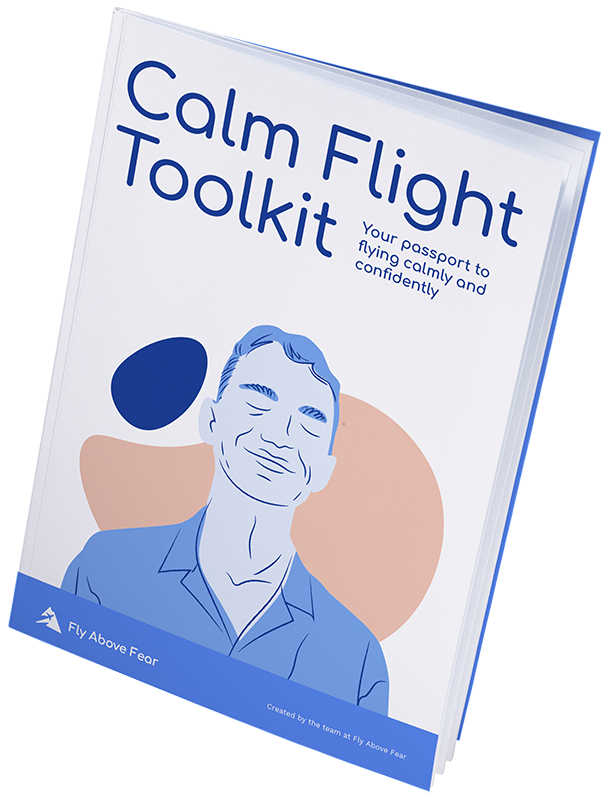
If you’re flying soon, download the Calm Flight Toolkit – our passport to a more relaxed flight. It’s packed with evidence-based insights, exercises, tools and techniques you can use.
From all of us Fly Above Fear, have a great flight!
FAQs
Yes, fear of flying it is one of the world’s most common phobias, affecting millions of people. (Other common phobias include spiders and heights.) While the causes of fear of flying are multifaceted, it’s often a learned response rather than an innate fear. That means that fear of flying can be unlearned with the right information and techniques.
Cure is a strong word and it’s something that we avoid. Rather than trying to remove all anxiety, it’s better to aim for the fear to be managed and significantly reduced. That’s not to say your fear of flying can’t be cured, it’s that there’s a huge difference between a slightly raised heart rate on the runway and a mid-flight panic attack.
Managing fear of flying is a journey that you can start today. Many people move from experiencing panic to being able to fly with confidence – and there’s no reason you shouldn’t. Progress isn’t always linear, sometimes you may experience a setback but the point is to keep moving forward positively.
Yes. All resources, guides, and tools on the Fly Above Fear website are completely free to access, and they will always remain that way. There are no paywalls or subscriptions in place to limit this content.
It may sound strange, but try not to panic about the panic! Instead, when you feel anxiety building, use grounding techniques, focus on your breathing, and remember that a panic attack is uncomfortable but not dangerous.
Our guide on Panic attacks on planes offers step-by-step actions to help you regain control.